Knowledge base
What is travertine? Properties, colours and uses
Updated · 5 min read
Travertine is a natural limestone that forms where mineral-rich spring water evaporates and deposits lime. That slow build-up gives the stone its typical pores and layered figuring. Travertine is hard enough for floors and terraces, stays cool in the sun and has been used as a building stone since Roman times.
How does travertine form?
Travertine forms at hot springs and in lime-rich rivers. Water saturated with calcium carbonate surfaces, carbon dioxide escapes and the lime precipitates layer by layer. Gas bubbles and plant remains leave cavities behind: the pores that make travertine so recognisable.
Because the deposition happens in layers, every block has a direction. Saw along the layers and you get straight veins (vein-cut); saw across them and you get a cloudy pattern (cross-cut). The same stone, two faces.
Which colours does travertine come in?
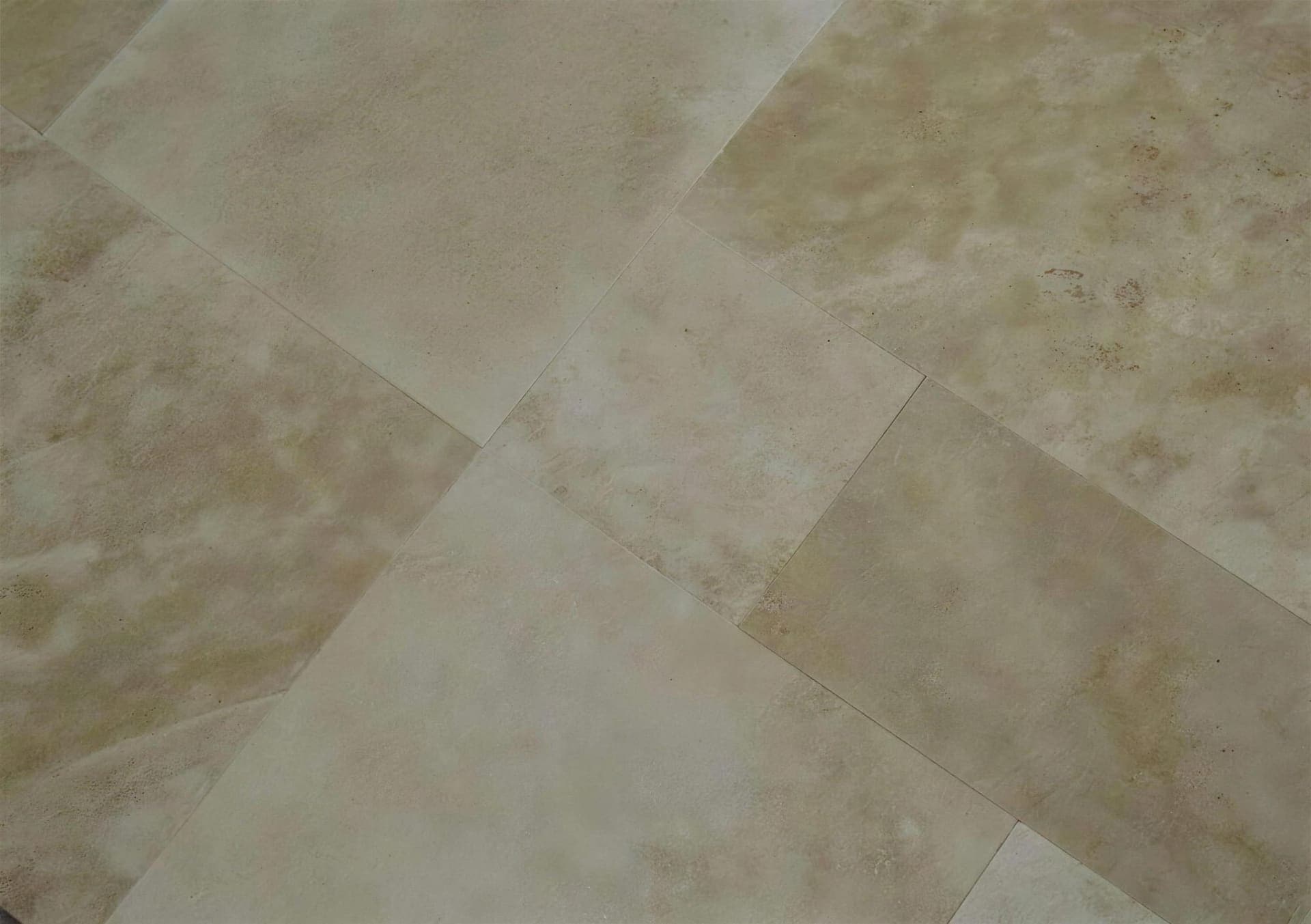
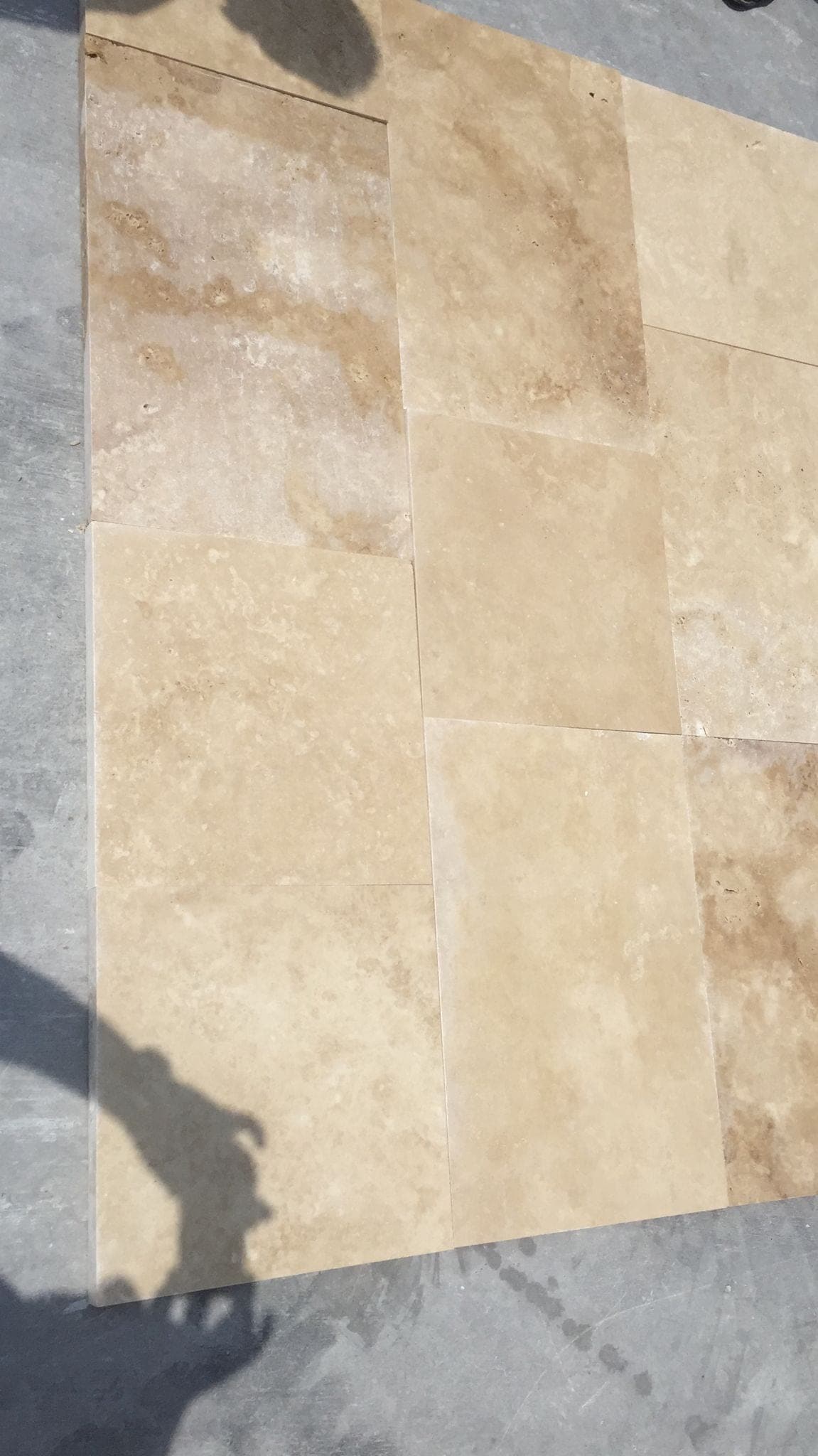
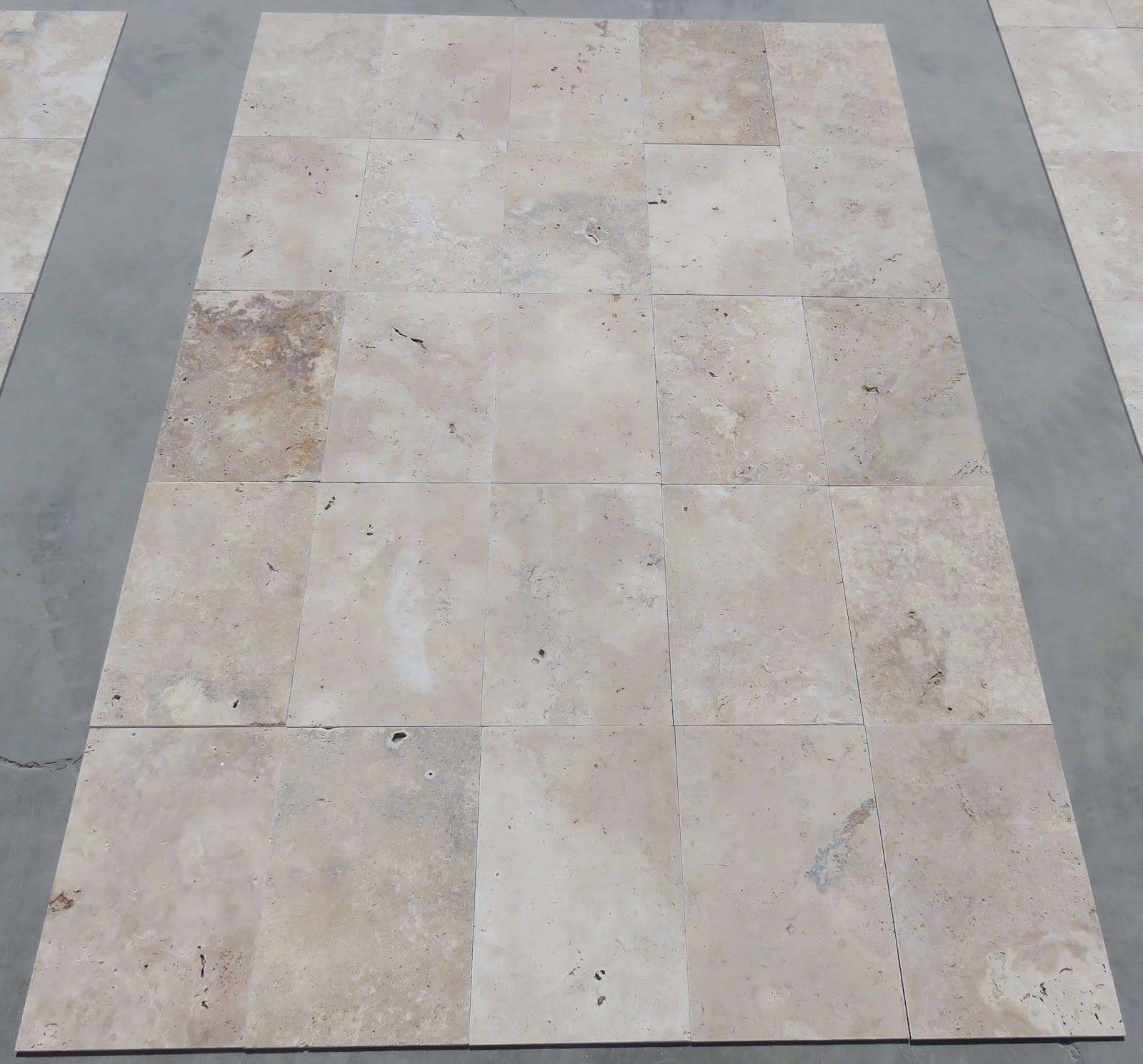
The colour is determined by iron and other minerals in the spring water. The spectrum runs from nearly white (Ivory) through cream and beige (Light, Crema, Classic) to warm brown (Noce), grey (Silver), gold (Gold), red (Rosso) and anthracite (Titanium). Within one series the tone varies from tile to tile; that is not a flaw but the character of natural stone.
- Light and ivory: coolest in the sun, spacious, timeless.
- Beige and classic: the classic Mediterranean look, forgiving in use.
- Noce and gold: warm, rich, beautiful with wood and brass.
- Silver and titanium: modern, suits concrete, black steel and white villas.
What is travertine used for?
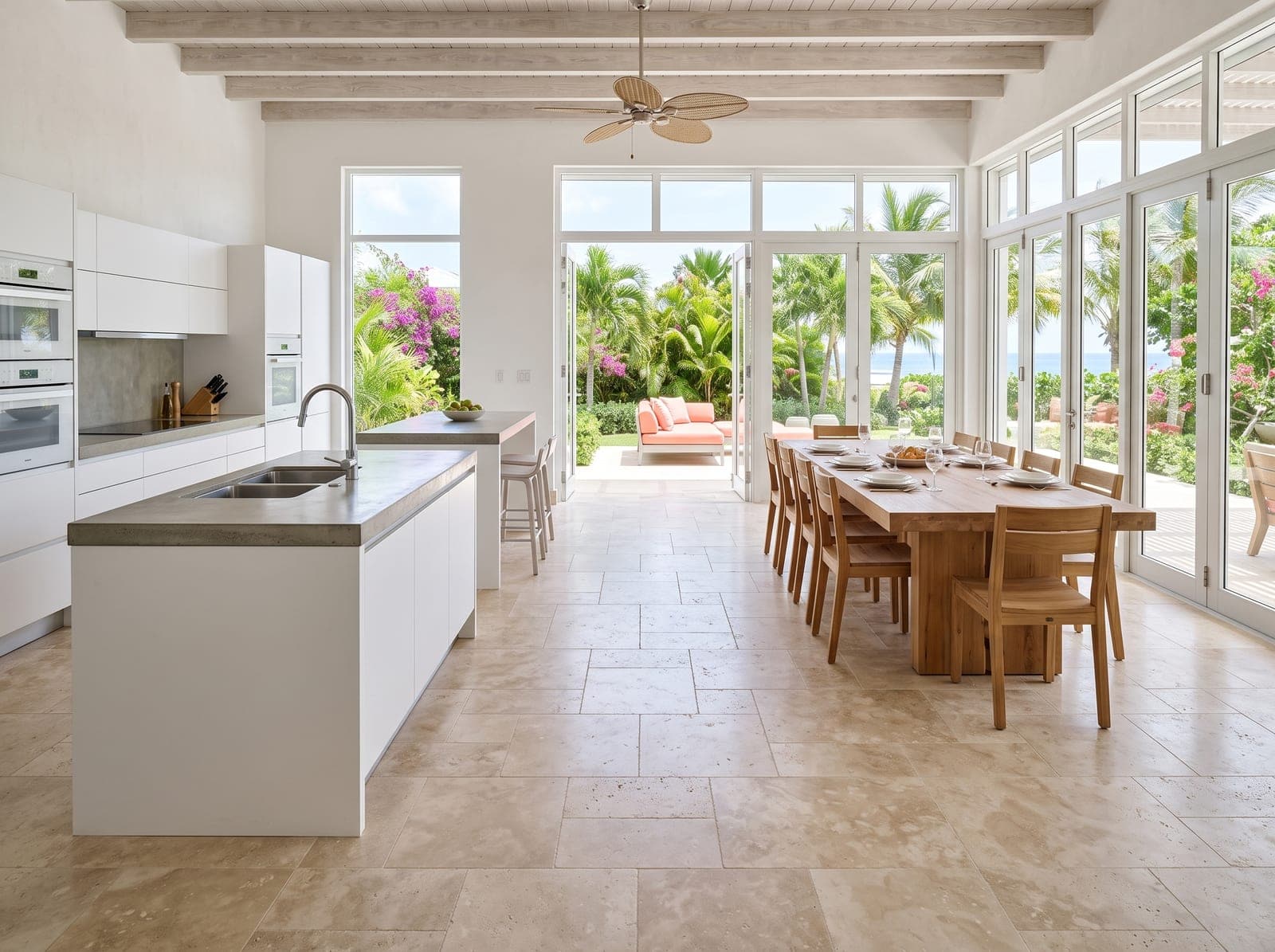
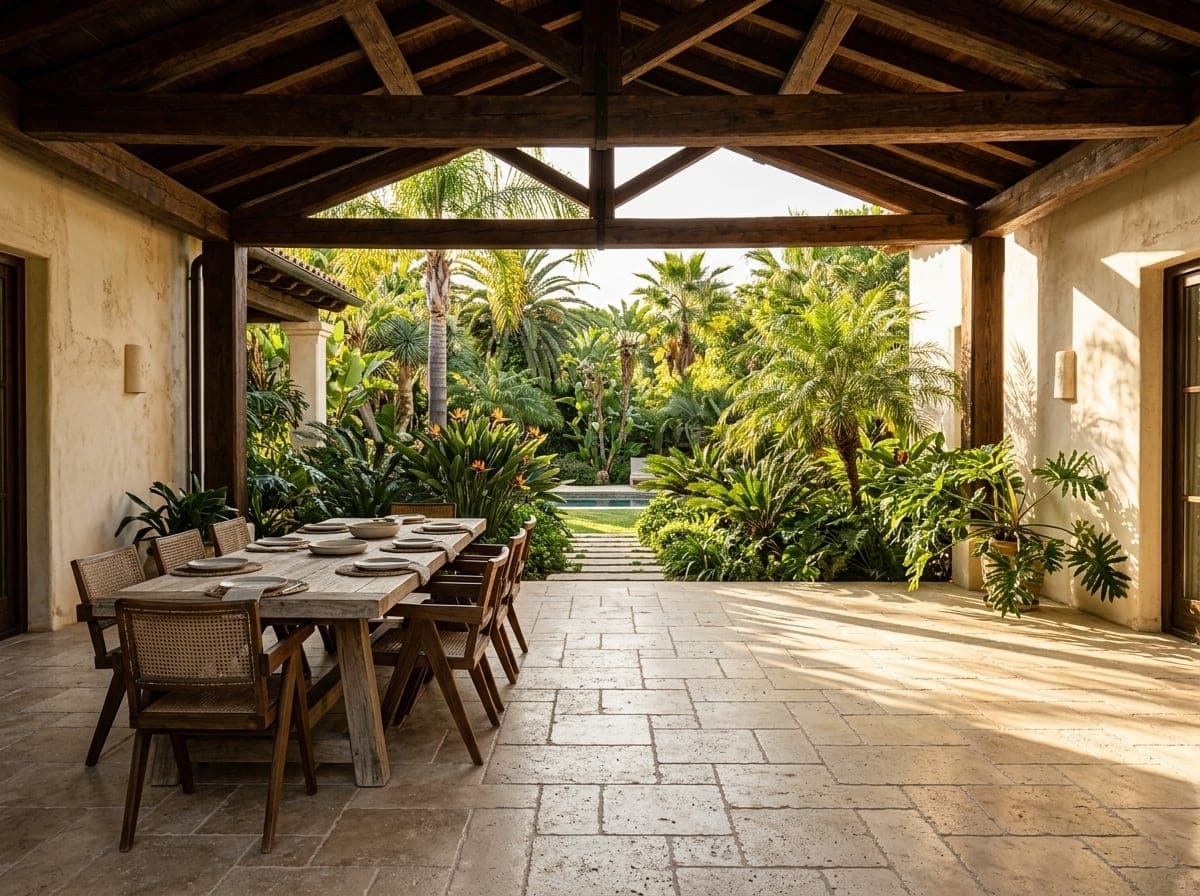
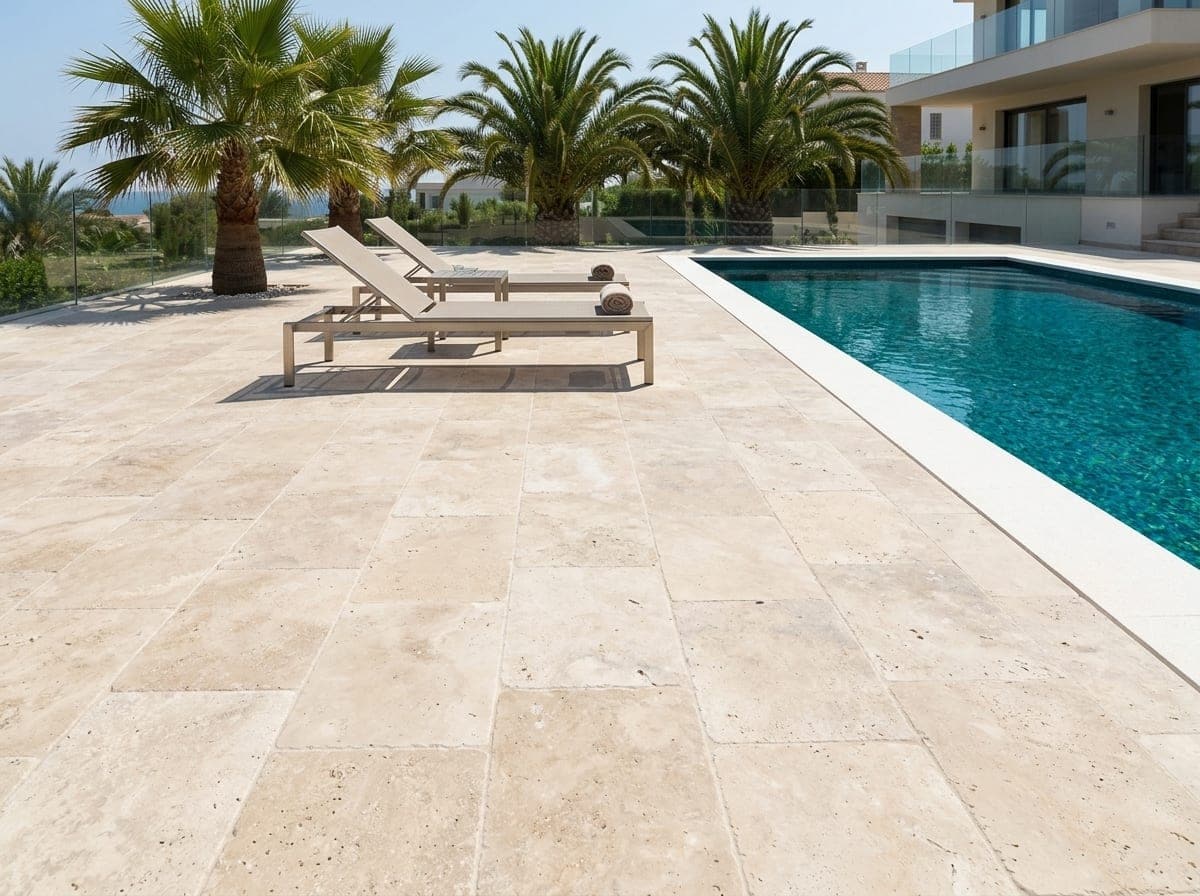
On Curaçao we mainly see travertine on terraces and around pools (3 cm pavers and pool coping), on floors that run from indoors to outdoors (1.2 cm tiles), in bathrooms (honed tiles and slabs) and as wall cladding with a cleft face (splitface and rockface). Slabs are cut to size into vanity tops, kitchen islands and shower walls.
Which finishes are there?
| Finish | Appearance | Suitable for |
|---|---|---|
| Honed | Matte, smooth, soft sheen | Indoor floors, bathroom, covered terrace |
| Polished | High gloss, deep colour | Walls, slabs, indoor floors (not wet areas) |
| Tumbled | Weathered, rounded edges, rough | Terrace, pool, garden path, rustic walls |
| Brushed | Light relief, matte | Terrace, bathroom |
| Splitface | Rough, naturally cleft | Facades, garden walls, feature walls |
Filled or unfilled?
The pores can be filled at the factory with resin or cement (filled) for a smooth surface that is easy to keep clean, or left open (unfilled) for the most natural look. Outdoors and on walls, unfilled is common; indoors and in the kitchen we recommend filled.
Travertine, travertin or travertijn: which is correct?
All three refer to the same stone. 'Travertine' is the English name; 'travertin' and 'travertijn' are the Dutch spellings you will see locally on Curaçao. If you are searching for travertine tiles, travertin or natural stone tiles on Curaçao, you are in the right place.
Is travertine suited to Curaçao's climate?
Yes, and better than most alternatives. The open structure keeps the stone cool in the sun, tumbled travertine is slip-resistant when wet, and once sealed the stone is unaffected by sea air, chlorine and tropical rain. Outdoors, choose a honed or tumbled finish and a light colour; your floor will then give you decades of pleasure.