Knowledge base
Vein-cut or cross-cut travertine: what is the difference?
Updated · 4 min read
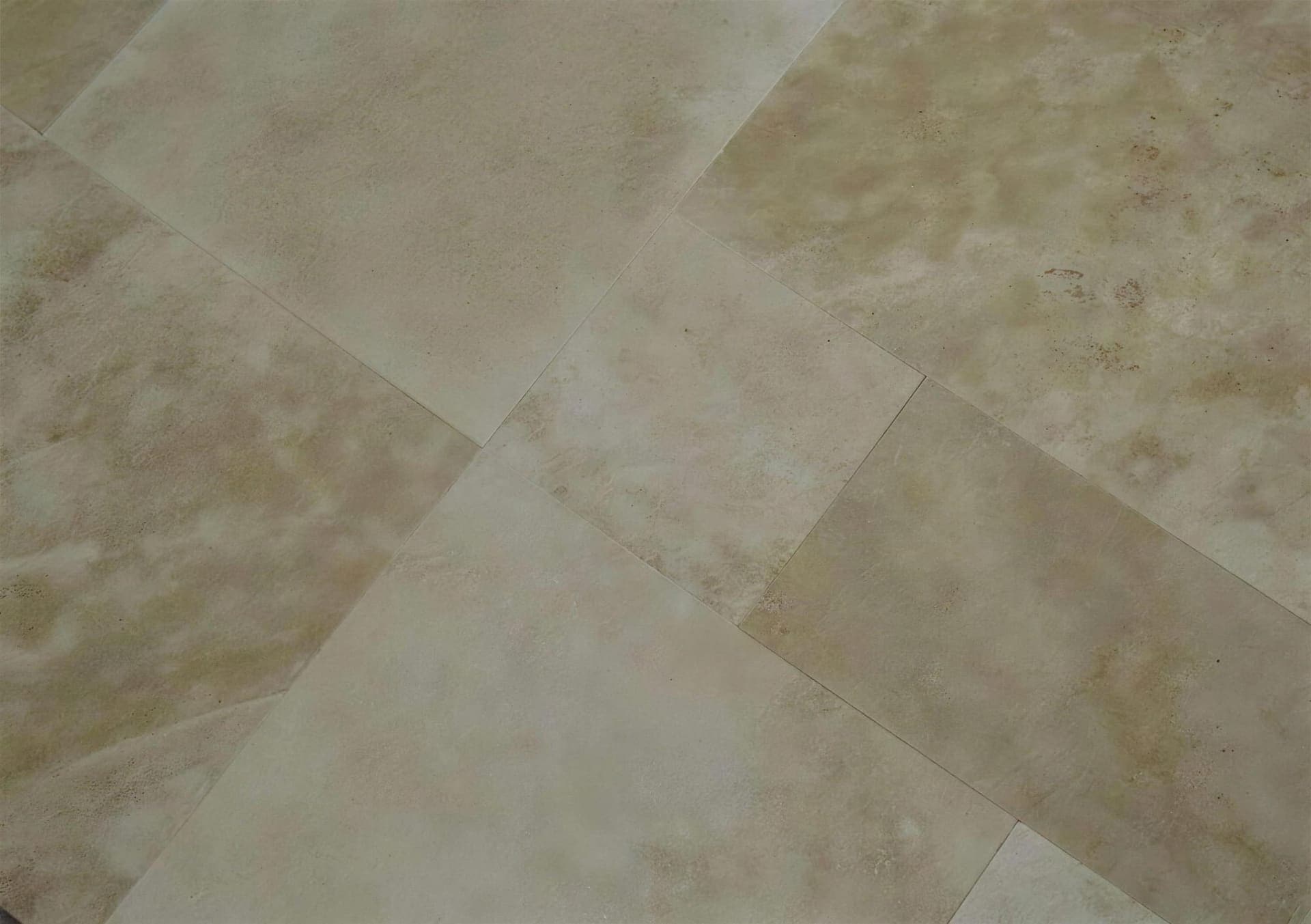
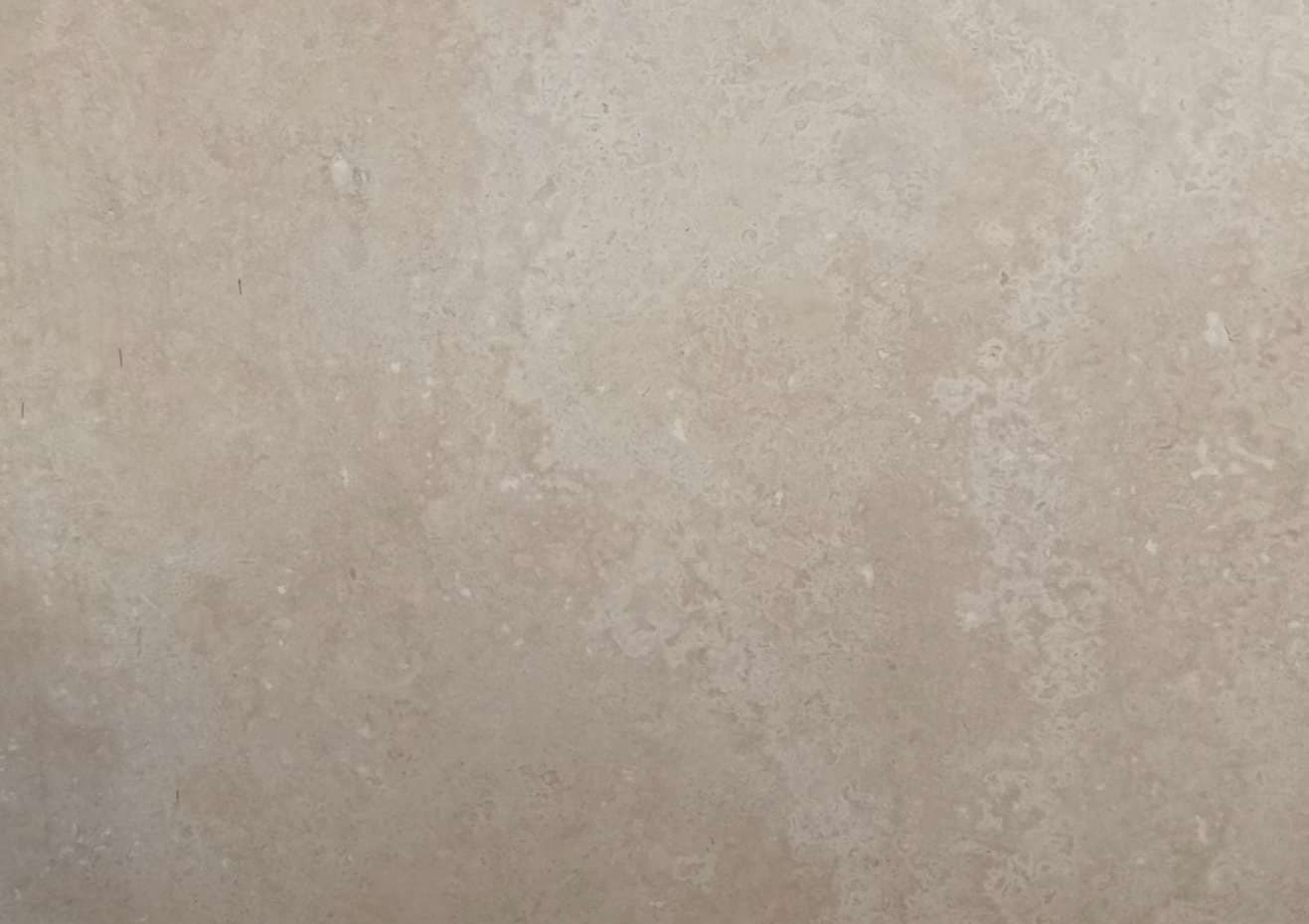
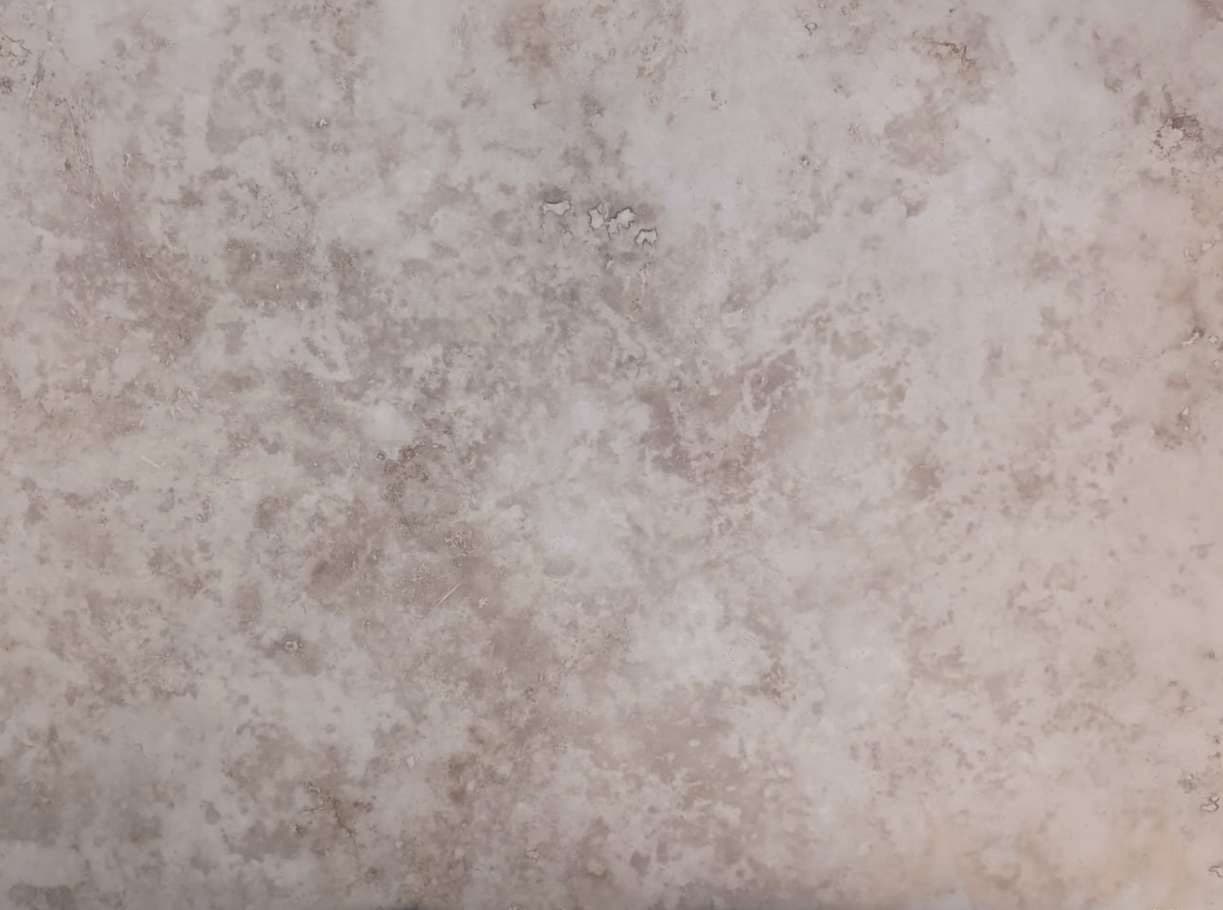
Vein-cut (VC) travertine is sawn along the length of the stone layers and shows straight, parallel veins. Cross-cut (CC) is sawn across the layers and shows a cloudy, mottled pattern with speckles. It is exactly the same stone; only the cutting direction — and with it the figuring — differs.
How does the difference arise?
Travertine is deposited in layers. A block from the quarry therefore has a 'grain', just like wood. If the factory saws the block parallel to those layers, you see the layers as lines: vein-cut. Saw at right angles to them and you look onto the layers, revealing a cloudy, rounded pattern: cross-cut.
Vein-cut: sleek and modern
Vein-cut travertine has straight, linear veins that visually lengthen a space. Lay all tiles in the same direction, for example towards the window or the terrace, for a calm, architectural picture. Vein-cut comes into its own in large formats, free-length strips and slabs, and in honed or polished finishes.
- Suits: modern villas, bathrooms, walls, kitchen islands.
- Note: vein-cut has more open veins; choose filled for indoor floors.
Cross-cut: classic and calm
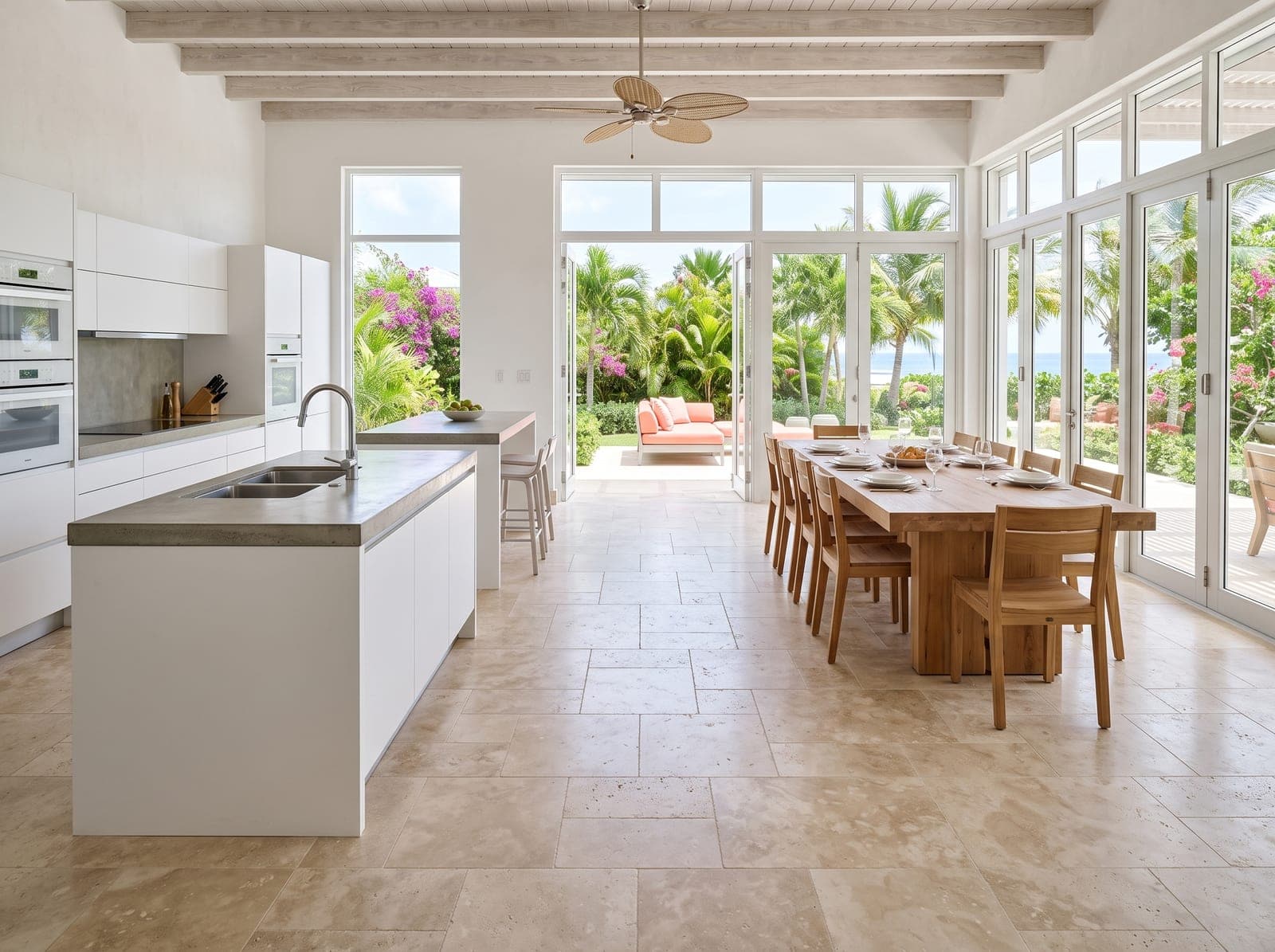
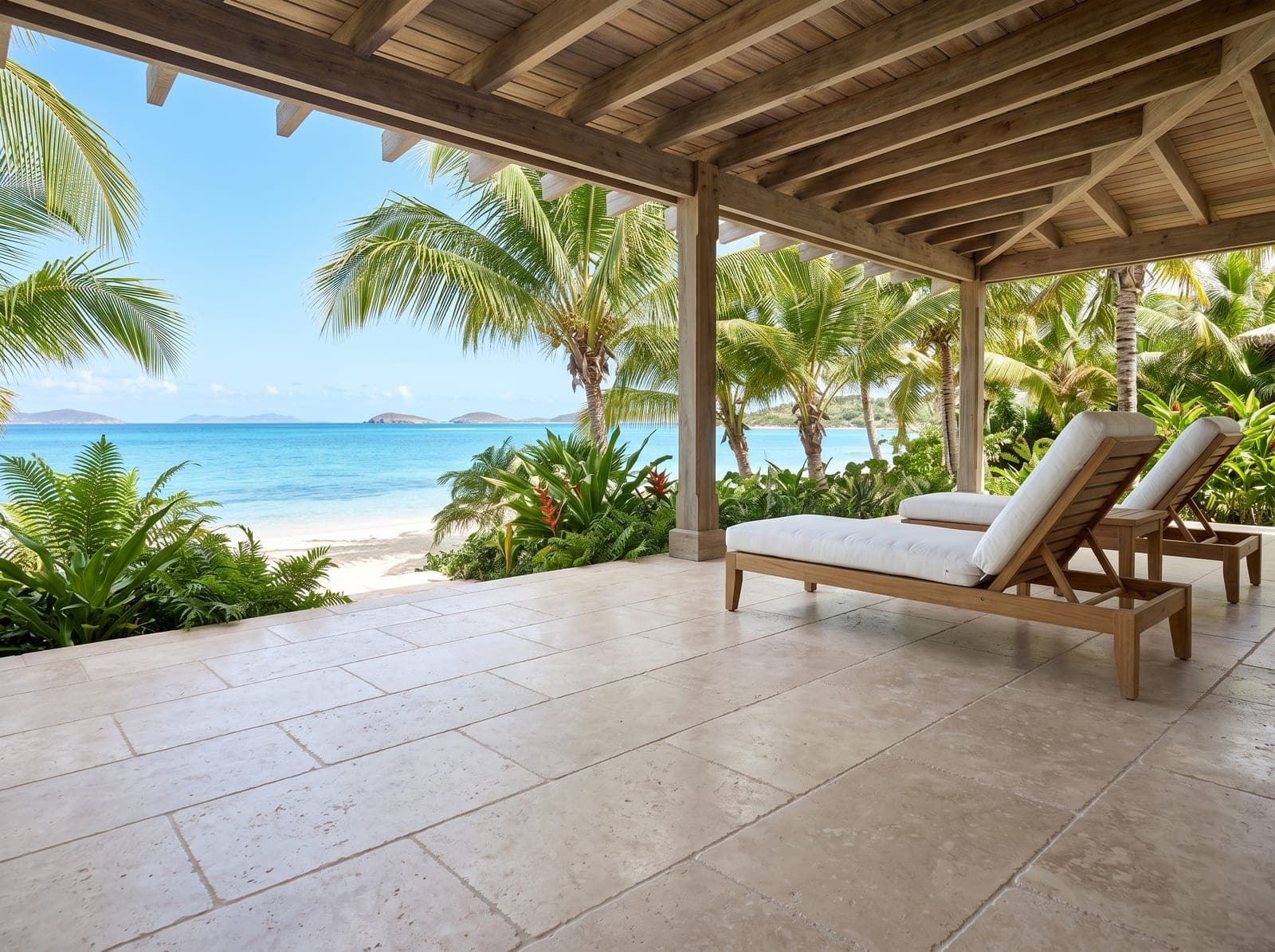
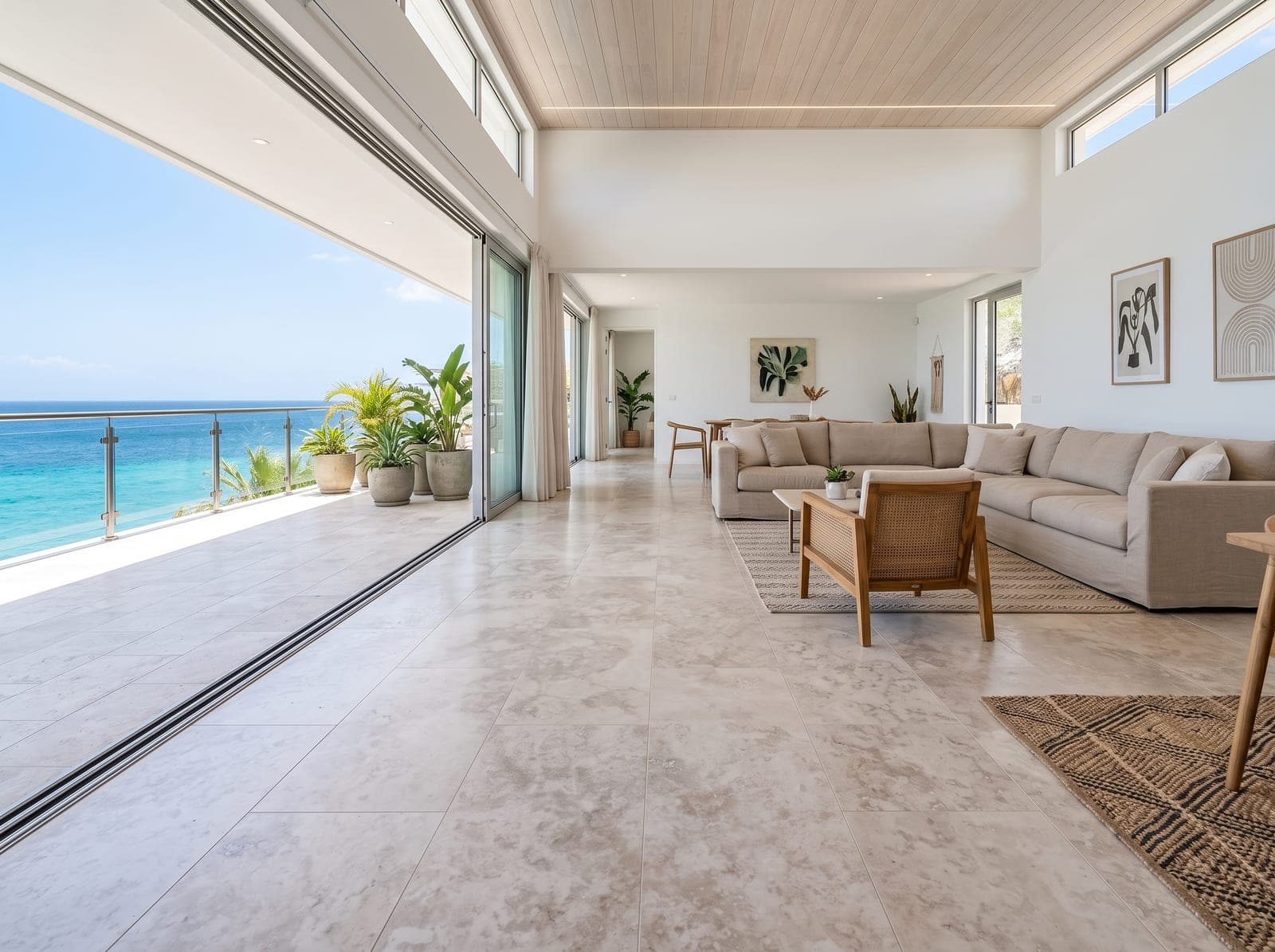
Cross-cut travertine shows a clouded, mottled figuring with small speckles. Because it has no direction, you can lay the tiles in any bond, including French pattern. Cross-cut is forgiving: colour differences and signs of use are less noticeable. Tumbled, it is the standard for terraces and pools.
- Suits: terraces, pool coping, French pattern, Mediterranean and classic styles.
- Note: every tile is different; mix tiles from several boxes.
Which cut do I choose for which space?
| Application | Advice | Why |
|---|---|---|
| Living room, hallway | Vein-cut or cross-cut | VC for sleek and spacious, CC for warm and classic |
| Bathroom | Vein-cut, honed | Straight veins on wall and floor bring calm to small spaces |
| Terrace and pool | Cross-cut, tumbled | No laying direction, slip-resistant, French pattern possible |
| Kitchen island, vanity | Vein-cut slab | Continuous veins across one sheet, bookmatch possible |
| Facade, garden wall | Splitface / rockface | Cleft face instead of a sawn surface |
Can I combine vein-cut and cross-cut?
Yes, and it happens often: tumbled cross-cut on the terrace and honed vein-cut indoors, in the same colour series. Because both come from the same block, the colours match while the figuring differs. Ask us for samples of both cuts from one series to see the effect side by side.