Knowledge base
Laying travertine: gluing, sand-cement, French pattern and grouting
Updated · 6 min read
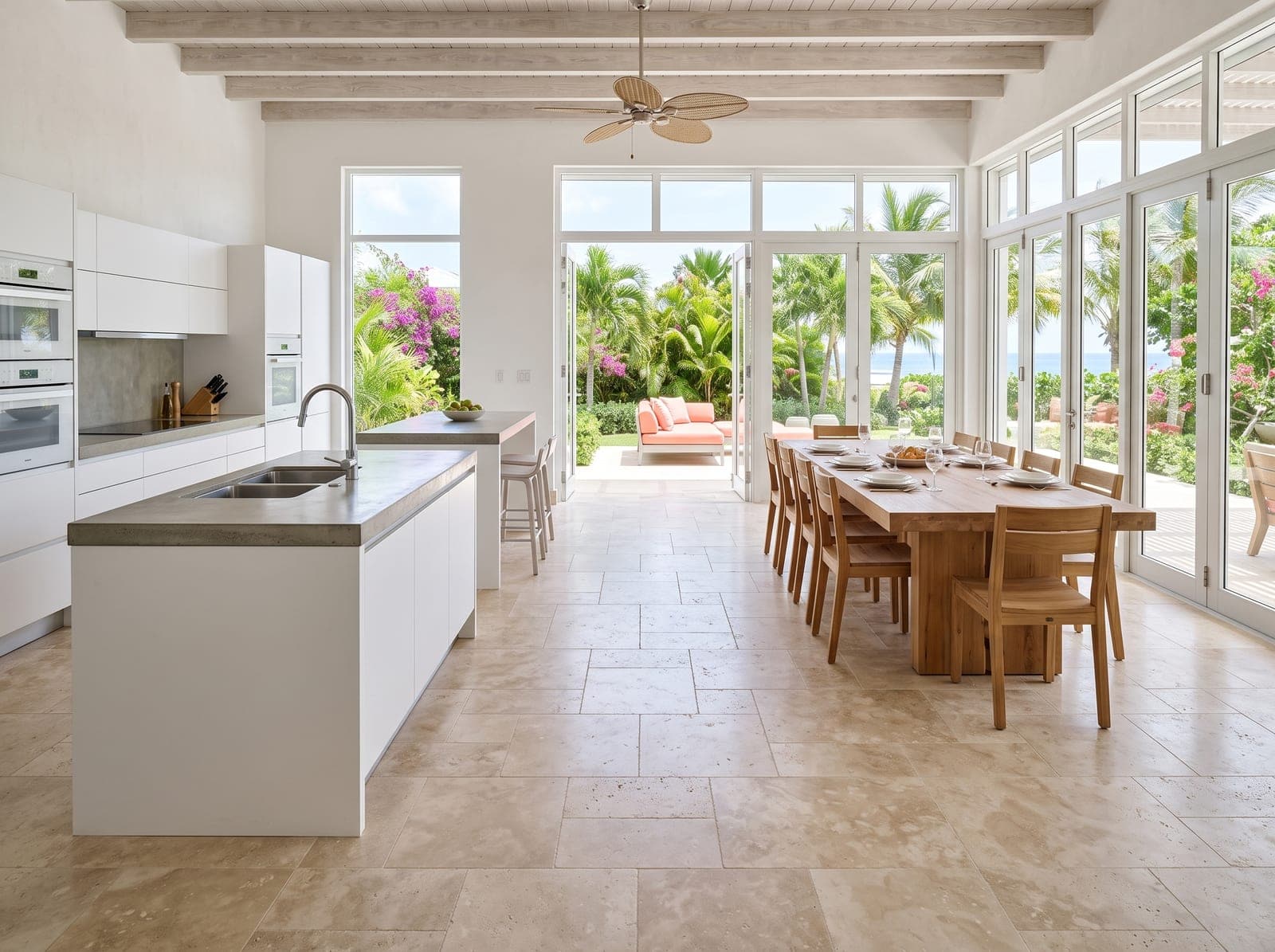
Glue 1.2 cm travertine tiles onto a flat concrete floor with flexible natural stone adhesive; lay 3 cm pavers in a bed of sand-cement on a compacted base. Work with a 3–5 mm joint indoors and 5–10 mm outdoors, use an acid-free grout and seal once cured.
Which substrate does travertine need?
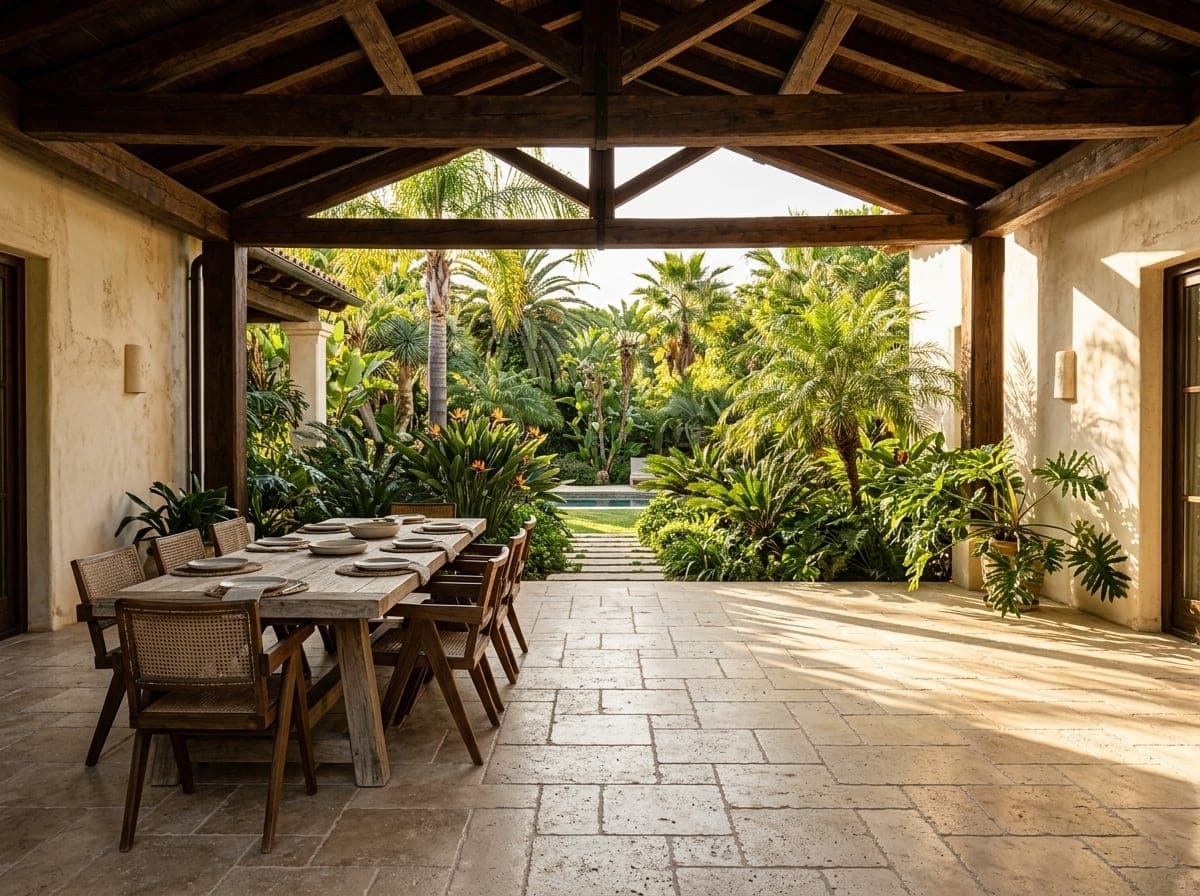
Indoors and on covered terraces: a dry, flat and stable concrete floor or screed. Outdoors for 3 cm pavers: a base of compacted crushed stone or gravel (10–15 cm) topped with a sand-cement bed of about 5 cm, with a 1–2% fall away from the house and the pool. Make sure rainwater can drain; standing water under the tile causes most problems.
Glue or lay in sand-cement?
| Aspect | Gluing (1.2–2 cm) | Sand-cement (3 cm pavers) |
|---|---|---|
| Substrate | Concrete floor or screed | Crushed stone/gravel + sand-cement bed |
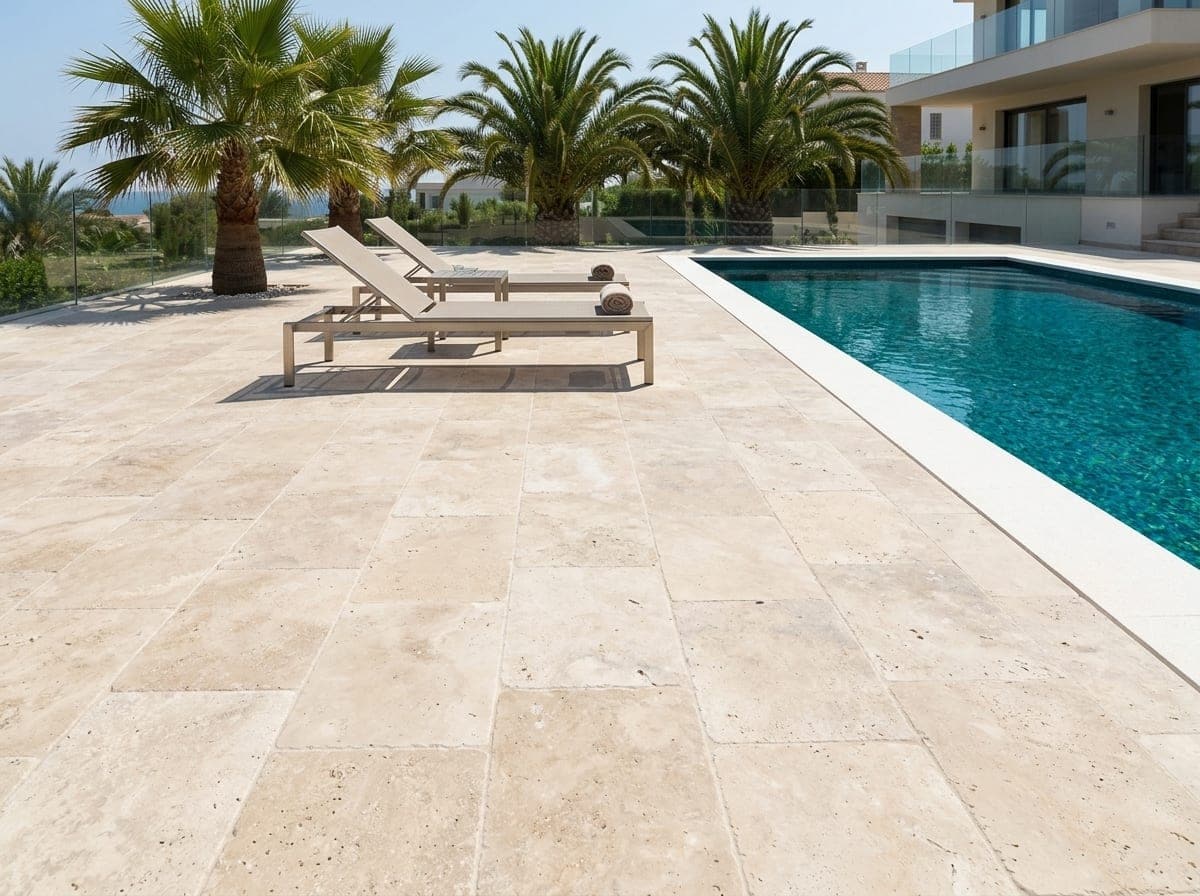
| Where | Indoors, veranda, covered terrace, pool coping | Open terrace, garden path, driveway, pool deck |
| Joint | 3–5 mm, flexible grout | 5–10 mm, jointing sand or permeable grout |
| Advantage | Sleek, thin, walkable once cured | No concrete slab needed, water drains, repairable |
How do I lay the French pattern?
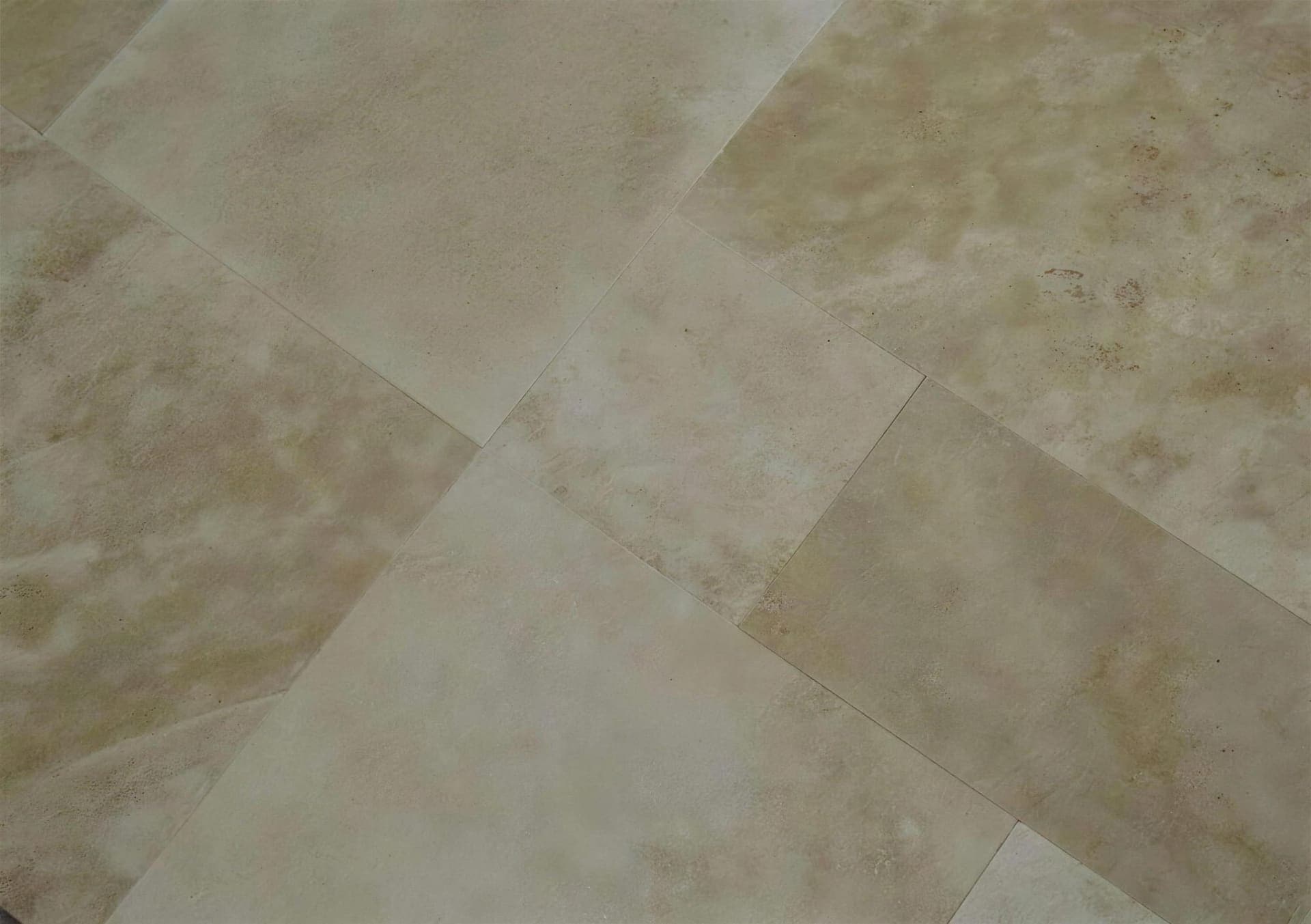
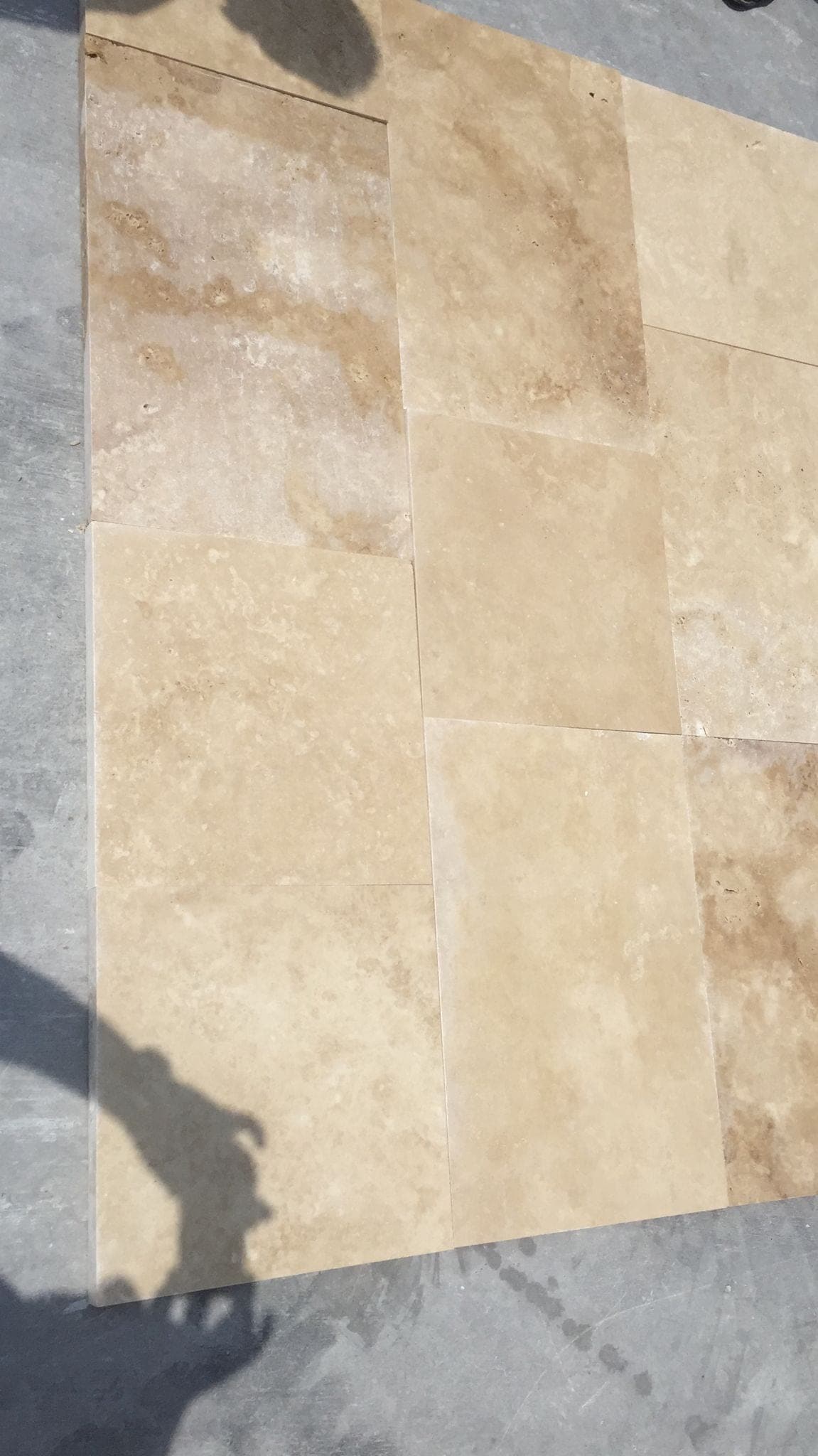
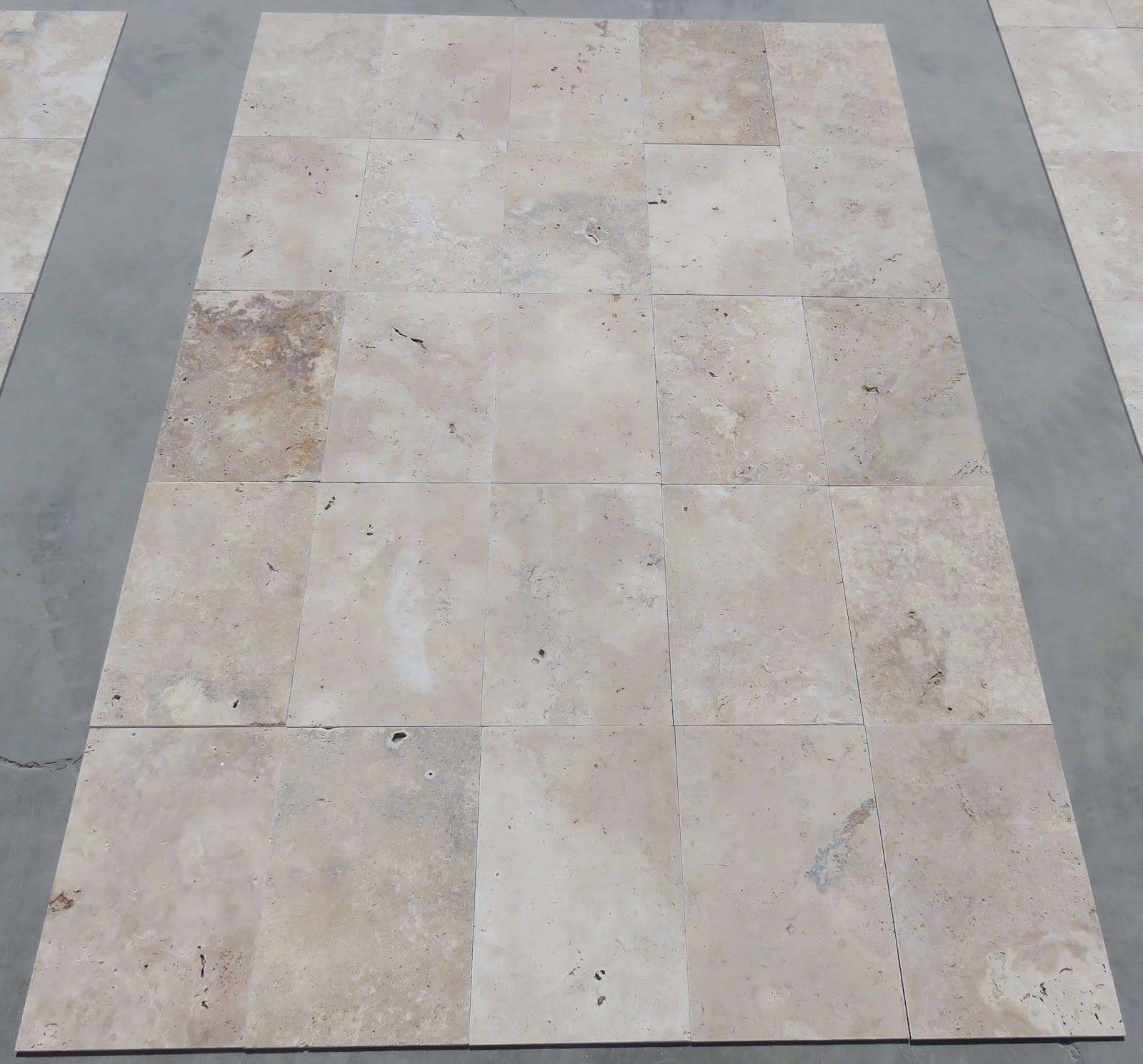
The French (Versailles) pattern consists of four sizes: 40.6 × 61, 40.6 × 40.6, 20.3 × 40.6 and 20.3 × 20.3 cm, in a fixed ratio per set. The pattern repeats every 1.2 × 1.2 metres without you noticing. Start from a straight corner using the laying diagram we supply, keep the same joint width throughout and mix tiles from several boxes for an even colour spread.
- Cutting waste: allow 15% extra.
- Direction: irrelevant with cross-cut; with vein-cut, all tiles facing the same way.
- Pool coping: lay the coping first, then the deck towards it.
Which other laying patterns are there?
- Running bond: rectangular tiles laid staggered; classic for 61 × 30.5 cm and bricks.
- Random bond: free-length strips in a continuous bond; modern, no repetition.
- Stack bond and grid: straight rows; calm and quick to lay in 61 × 40.6 or 40 × 60 cm.
- Herringbone: 7.5 × 20.3 cm bricks at 90°; artisanal, beautiful on paths.
- Diagonal: straight tiles at 45°; makes a small space feel bigger, 15% cutting waste.
Which adhesive and grout do I use?
Use a flexible, white or light-coloured natural stone adhesive (grey adhesive can show through light travertine). Grout with an acid-free jointing mortar in a colour that matches the stone; outdoors a flexible or permeable joint. Unfilled travertine can be grouted across its whole surface at the same time to fill the pores. Remove cement haze with an acid-free cleaner for limestone.
What are the final steps?
- Let adhesive and grout cure for at least 48 hours (sand-cement a week).
- Clean the floor and let it dry.
- Seal with a natural stone sealer; repeat yearly outdoors.
- Place furniture on felt pads; do not use acidic cleaners.