Knowledge base
Travertine or ceramic tiles: which is better for Curaçao?
Updated · 5 min read
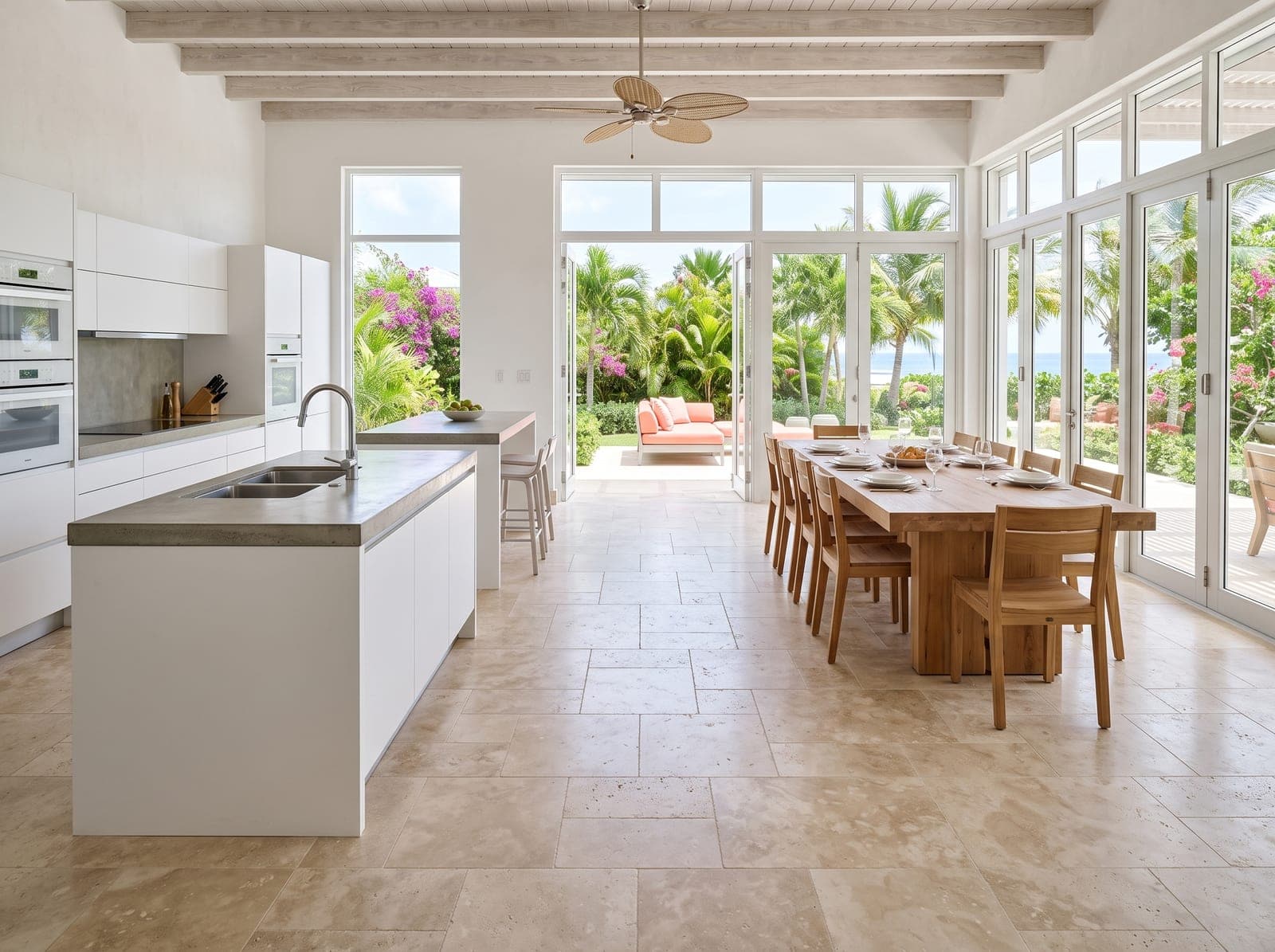
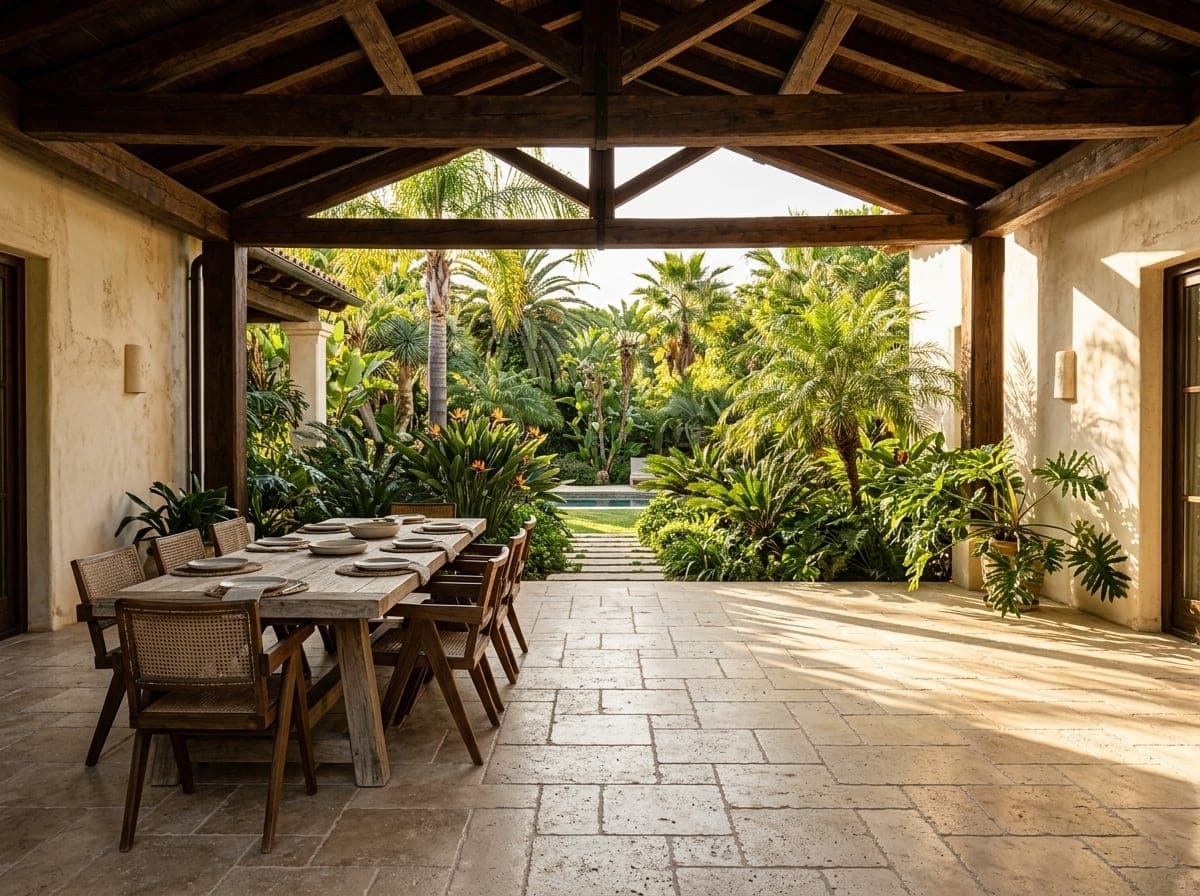
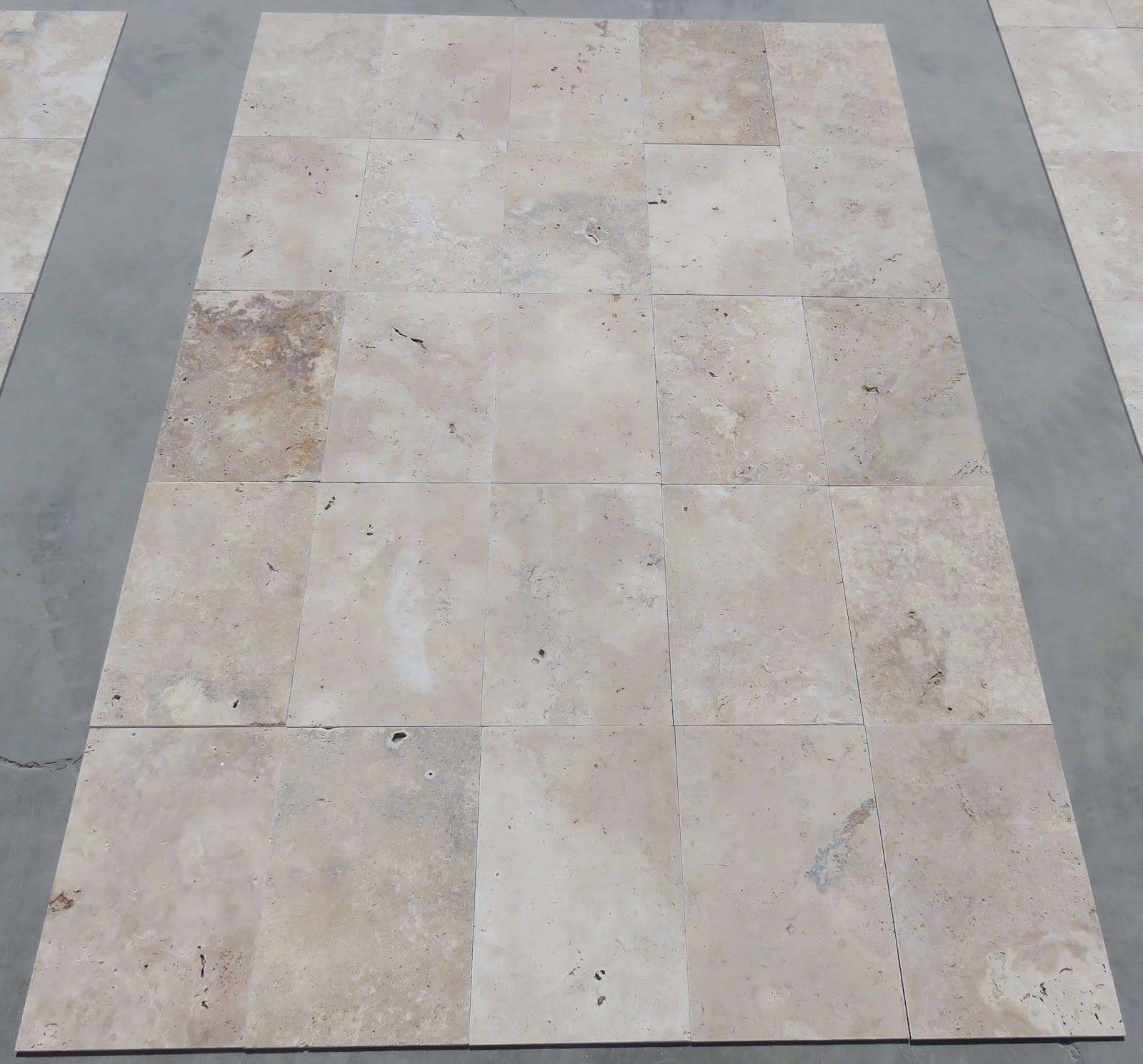
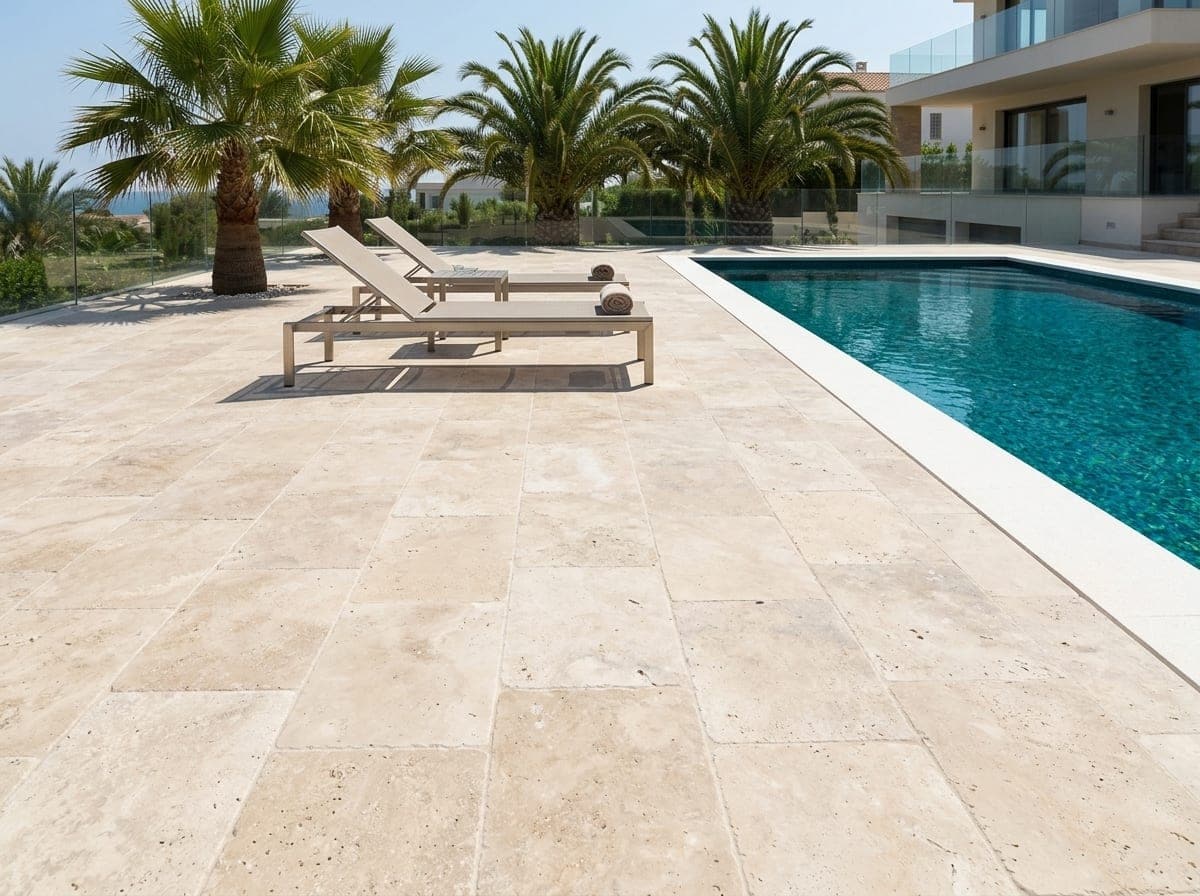
Travertine stays cooler in the sun, is real natural stone with unique figuring and lasts decades; ceramic is harder, more stain-resistant and lower-maintenance but gets hotter and looks repetitive. Around the pool and on terraces travertine wins on comfort; in a busy kitchen ceramic can be more practical.
Travertine and ceramic compared
| Property | Travertine | Ceramic (travertine-look) |
|---|---|---|
| Heat in the sun | Stays relatively cool, especially light colours | Gets hot, certainly dark and smooth tiles |
| Slip resistance wet | Tumbled: very good; honed: good | Depends on R-class; smooth tiles poor |
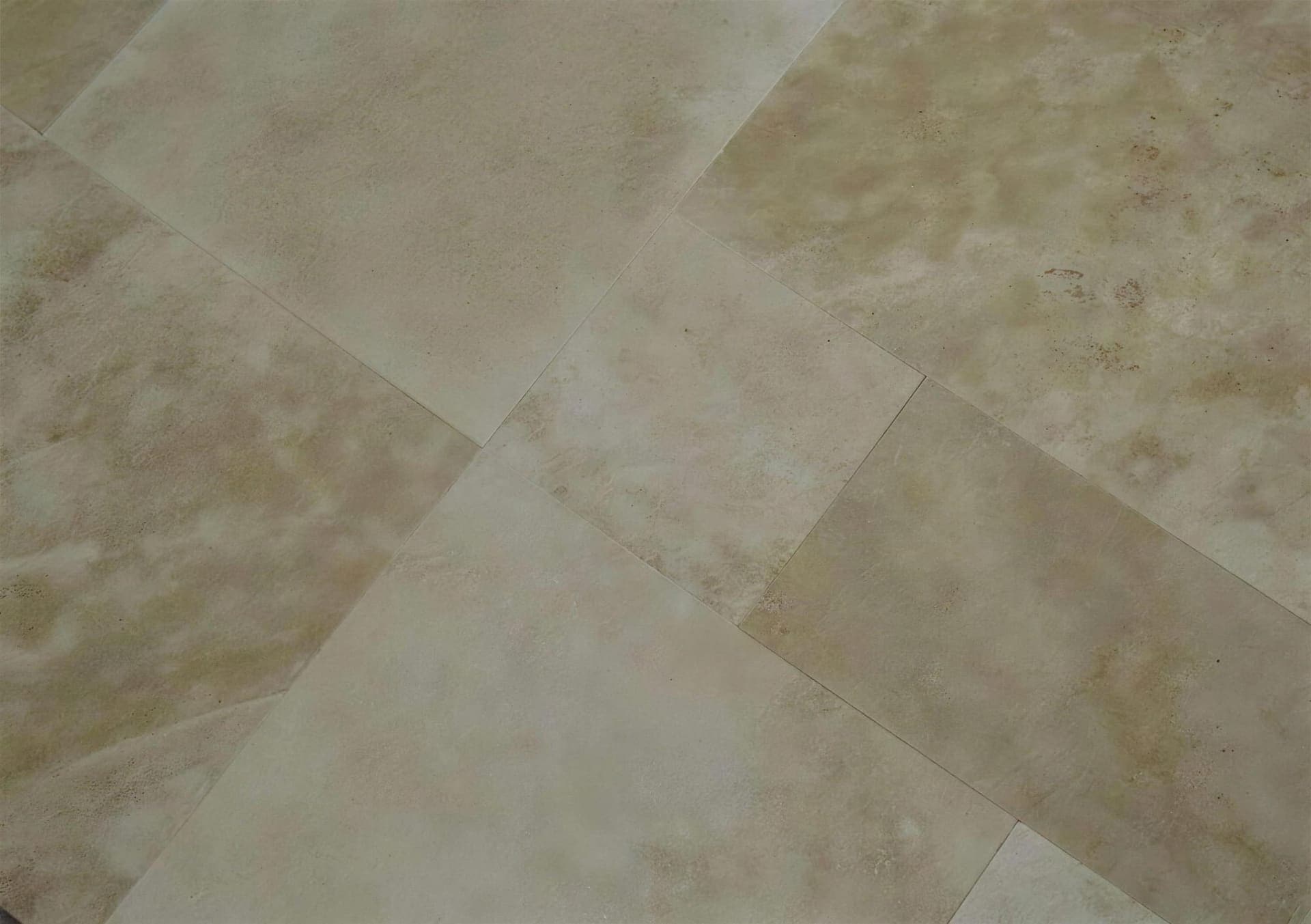
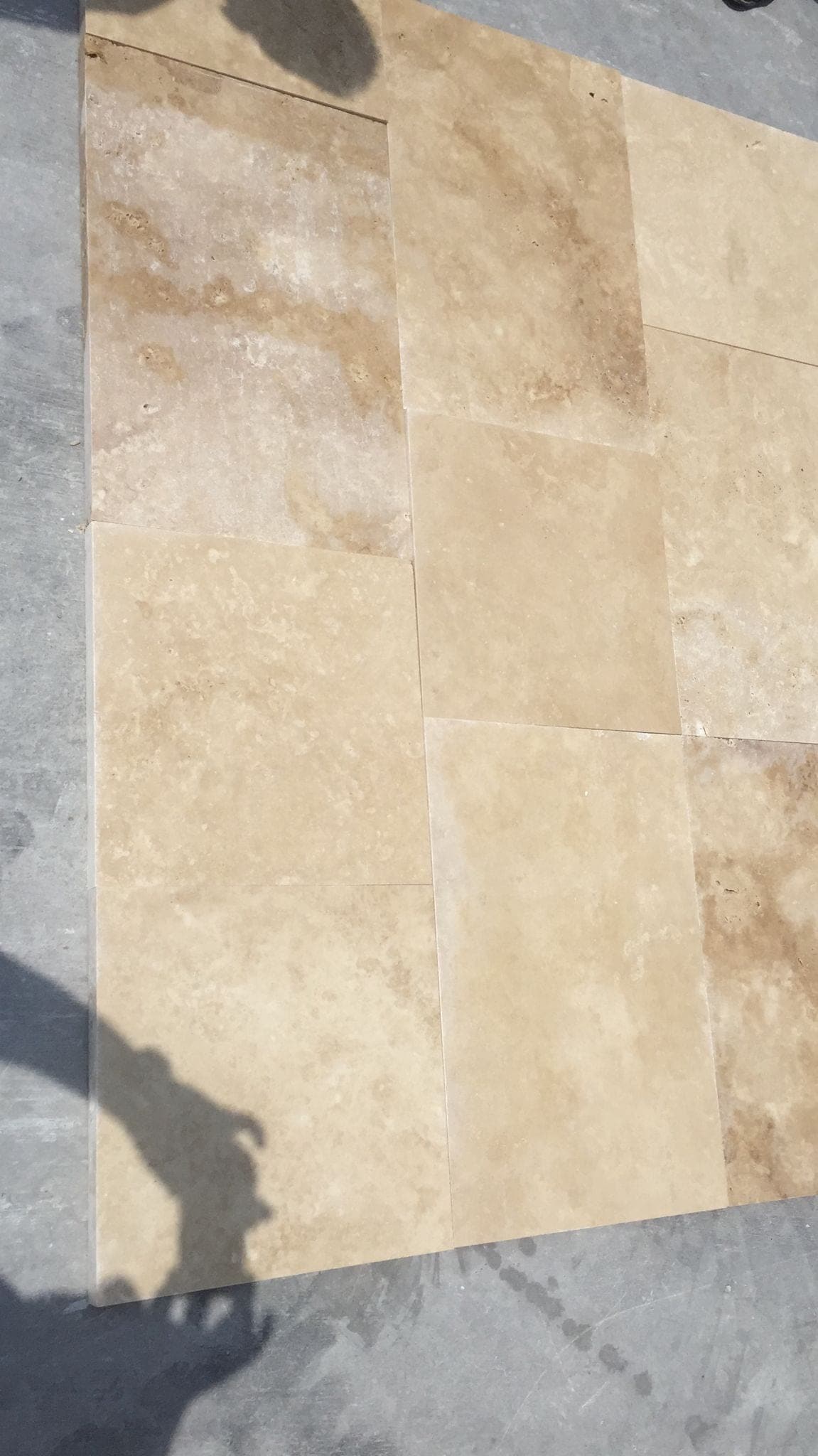
| Appearance | Real natural stone, every tile unique | Print, pattern repeats |
| Scratch resistance | Softer (Mohs 3–4), scratches can be polished out | Very hard, scratches are permanent |
| Stain sensitivity | Sealing needed; avoid acids | Hardly any; acid-resistant |
| Maintenance | pH-neutral soap, yearly sealing outdoors | Water and all-purpose cleaner |
| Lifespan | Decades; can be re-honed | Long; cannot be renovated, glaze can wear |
| Repair | Can be locally filled or re-honed | Replace the tile (same batch needed) |
| Weight/thickness outdoors | 3 cm pavers in sand-cement | 2 cm ceramic on pedestals or adhesive |
| Perceived value | High; increases property value | Neutral |
When do you choose travertine?
- Around the pool and on open terraces: cool and slip-resistant.
- If you want a natural, timeless look without repetition.
- For a floor that runs from indoors to outdoors in the same stone.
- If renovation value matters to you: travertine can be re-honed after 20 years.
When is ceramic a good choice?
- In an intensively used kitchen with lots of acid and grease, if you do not want a sealing routine.
- For a very sleek, uniform look without colour variation.
- On pedestals on a roof terrace with limited load capacity.
What about the costs?
Per square metre, travertine and a good ceramic outdoor tile are often comparable; large-format ceramic imitations of natural stone are regularly more expensive than real travertine. Over its lifespan travertine is usually cheaper: the stone is not replaced but refreshed. For a concrete comparison, request a price via WhatsApp with the number of square metres.
And travertine versus other natural stone?
Compared with marble, travertine is more slip-resistant and cooler, and less prone to dull patches. Compared with granite and basalt, travertine is softer but much cooler in the sun and lighter in colour. Limestone resembles travertine but lacks the characteristic pores. For a Caribbean terrace, travertine is therefore the most chosen natural stone.