Knowledge base
Travertine around the pool: deck, coping and care
Updated · 5 min read
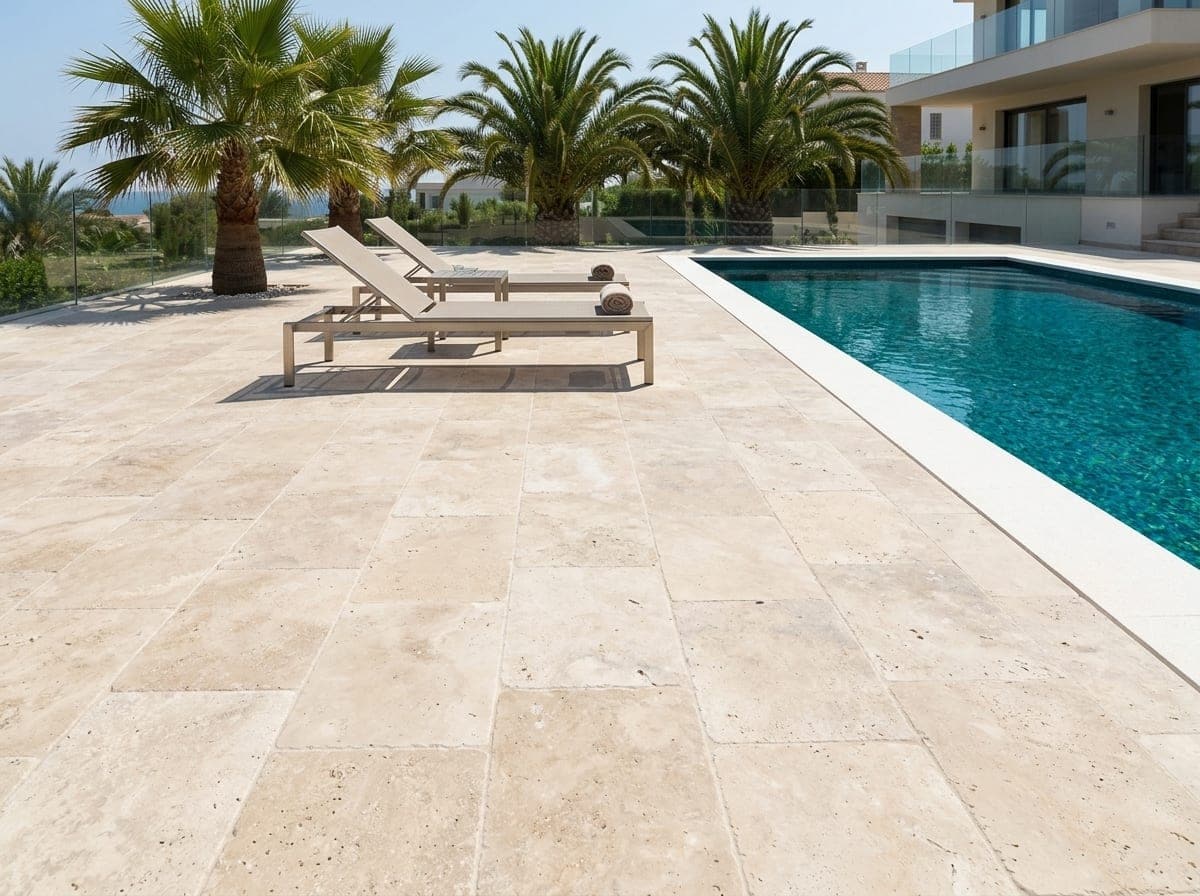
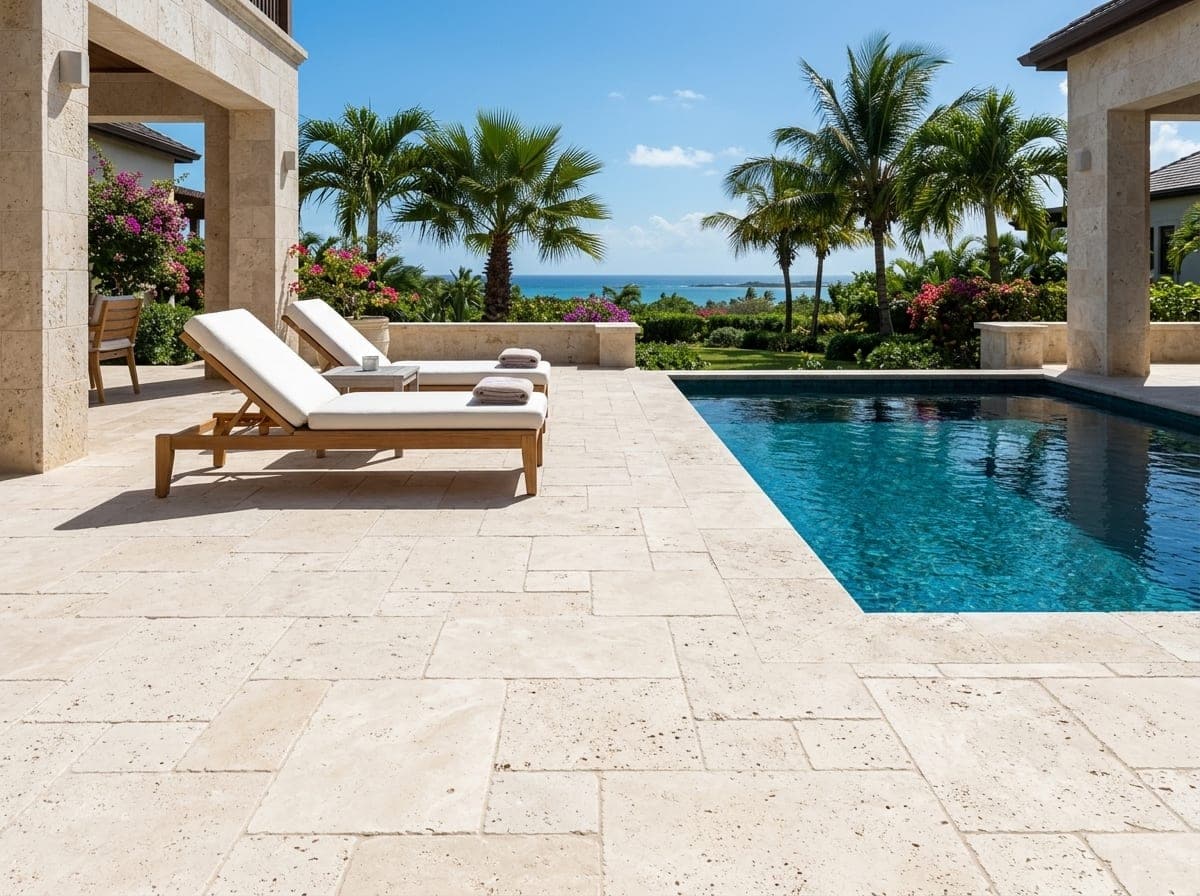
Travertine is the most used natural stone around pools, because the open structure keeps the tile cool in the sun, tumbled travertine is slip-resistant when wet and, once sealed, the stone is unaffected by chlorine and salt. Choose 3 cm pavers for the deck and coping stones with a rounded front edge (bullnose) for the rim.
Why travertine around the pool?
- Cool underfoot: light travertine gets noticeably less hot in the Caribbean sun than concrete, ceramic and dark stone.
- Slip-resistant: the tumbled, matte texture gives grip, even with wet feet and children running.
- Salt and chlorine resistant: once sealed, pool water cannot penetrate the stone.
- Timeless: travertine ages beautifully and suits white villas, wood and tropical greenery.
Which travertine do I choose for the pool deck?
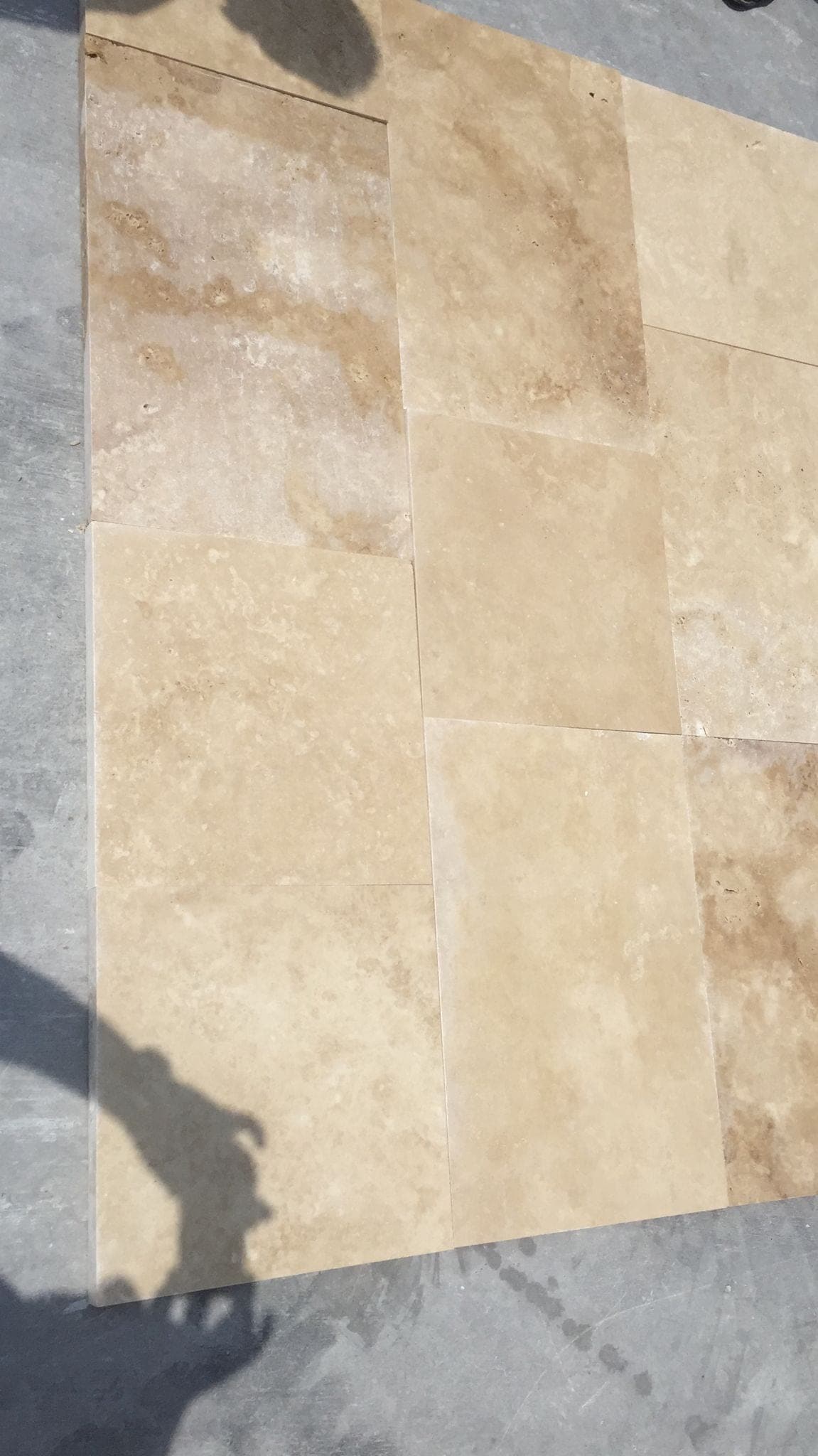
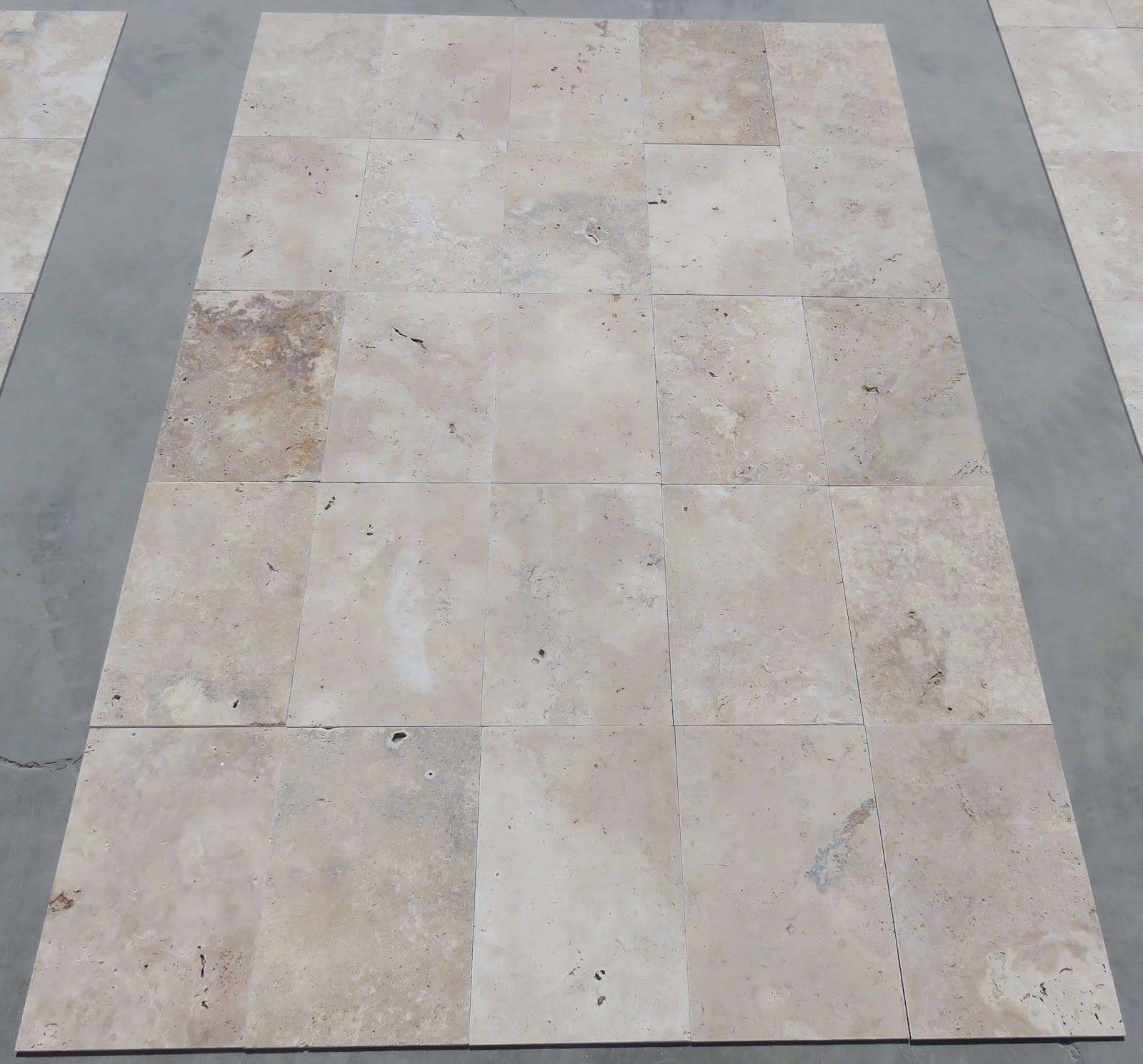
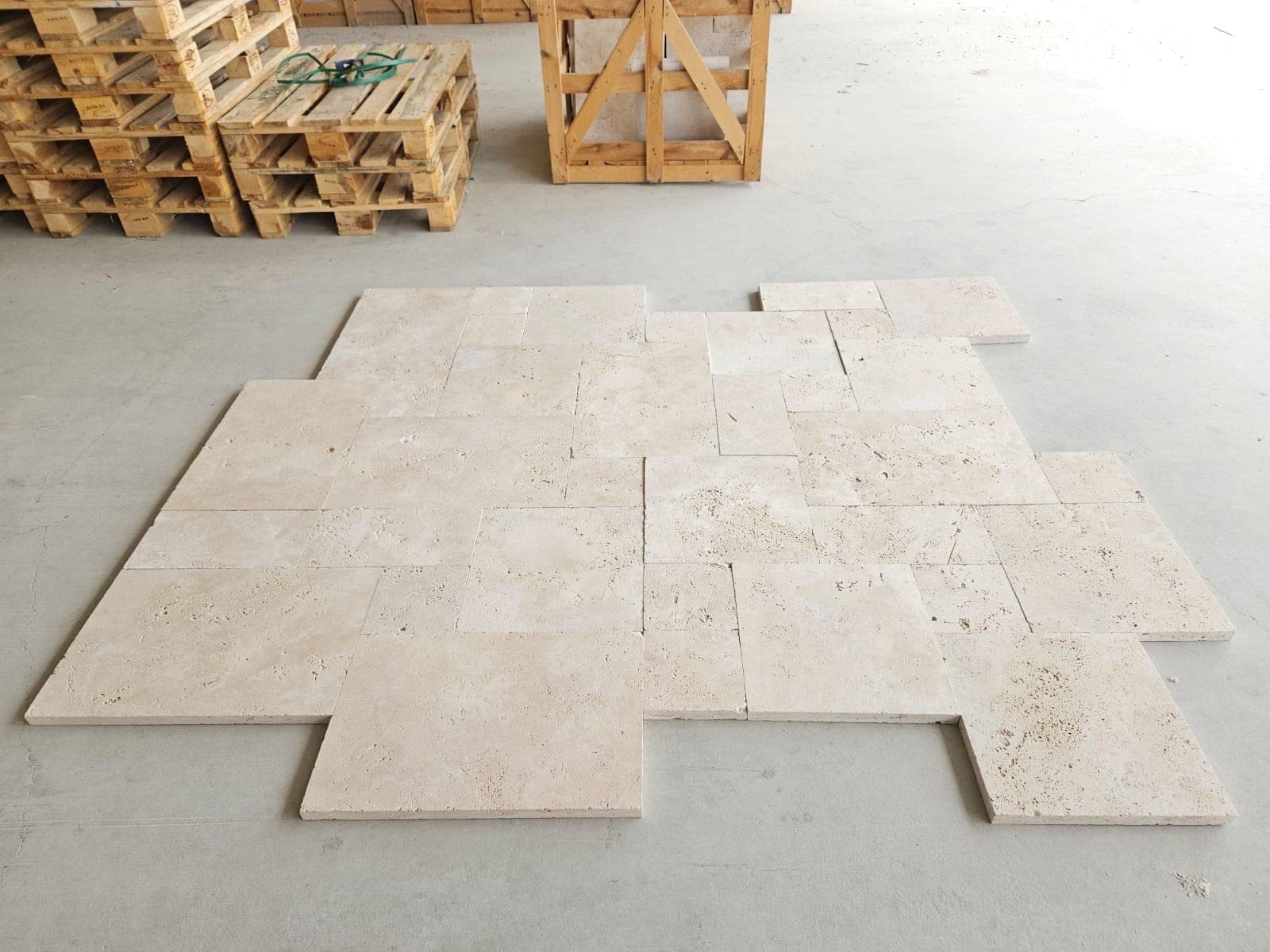
For the deck around the pool, choose pavers 3 cm thick, tumbled and unfilled. French pattern (four sizes) gives a lively, Mediterranean layout; rectangular 40.6 × 61 cm tiles look sleeker. Light colours (Ivory, Light, Classic Mix) stay coolest; Silver and Silver Light are the modern choice.
Which pool coping matches?
The coping is a 3 cm thick edge piece with a rounded front, usually 61 × 30.5 cm. Choose the same colour as the deck for one continuous surface, or a lighter edge as an accent. For round pools use small pieces of 30.5 × 30.5 or 15.25 × 30.5 cm; for long straight sides, pieces of 100 or 120 cm with fewer joints.
How do I lay travertine around a pool?
- Deck: 3 cm pavers on a compacted sand-cement bed (about 5 cm) over a crushed-stone base, with a 5–10 mm joint and a slight 1–2% fall away from the pool.
- Coping: glue the edge pieces onto the concrete pool rim with flexible exterior adhesive, rounded edge facing the water, 2–4 cm overhang.
- Joints: permeable jointing sand or a flexible exterior grout; around the rim a waterproof joint.
- Finish: seal once cured, and repeat yearly.
How do I maintain travertine by the pool?
Rinse off sunscreen and salt regularly with water. Clean with a pH-neutral stone soap; never use acid (descaler, vinegar, chlorine cleaner on the stone). Remove algae and green deposits in the rainy season with a natural stone cleaner and a soft brush. Seal yearly; a drop of water that beads up means the sealer is still working.
What about salt or chlorinated water?
Both are fine with travertine. With saltwater pools a light white salt haze can form near the edge; rinsing with fresh water is enough. Chlorinated water left standing on the coping is rinsed off in the same way. The most important thing is the sealer: it keeps the pores closed.